

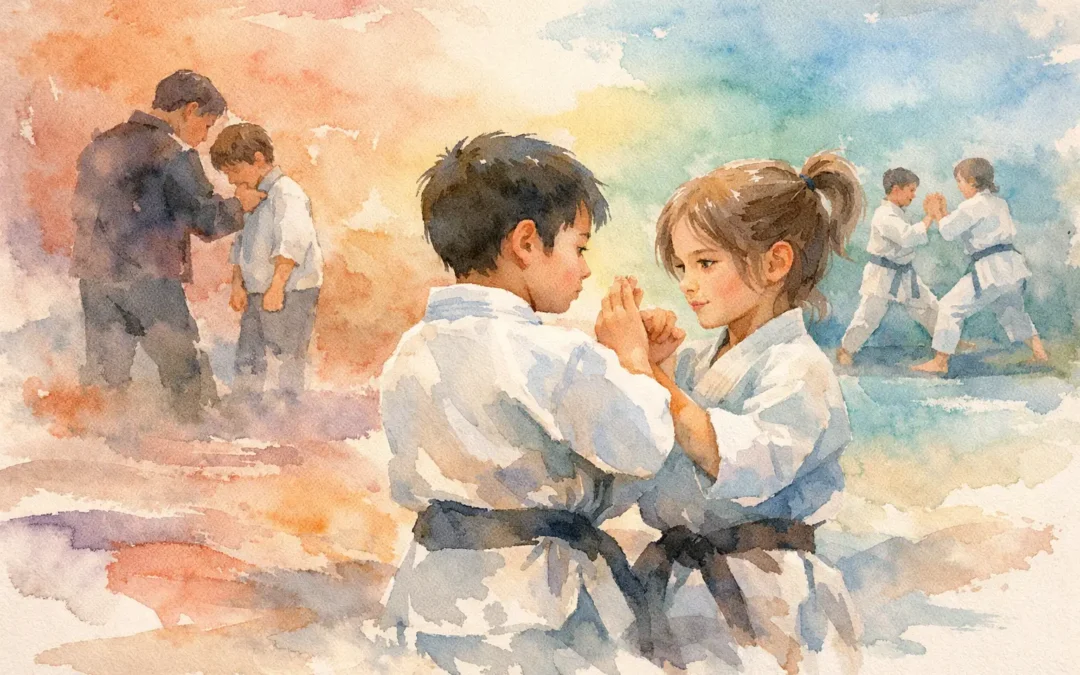
A child who feels picked on rarely needs another lecture about confidence. They need a place where confidence is practiced, not just discussed. That is why anti bullying martial arts classes matter. When training is taught the right way, students do more than learn techniques. They learn how to stand tall, speak clearly, manage fear, and respond with control instead of panic.
For many parents, the real concern is not whether their child can throw a punch. It is whether their child can handle pressure at school, avoid becoming an easy target, and build the kind of self-respect that changes how they carry themselves. Good martial arts instruction addresses that whole picture.
What anti bullying martial arts classes actually teach
The biggest misconception is that martial arts classes teach kids to fight back physically at every problem. Strong schools teach the opposite first. Students learn awareness, posture, eye contact, verbal boundaries, and emotional control before physical defense ever becomes the focus.
That matters because bullying is often about power, not just conflict. A bully usually looks for hesitation, insecurity, or isolation. Martial arts training can change those signals. As students improve their stance, voice, and composure, they often look less vulnerable. That shift alone can make a difference in how peers treat them.
There is also a deeper benefit. Martial arts gives children repeated practice in doing hard things. They walk into class nervous, follow instruction, make mistakes, improve, and earn progress over time. That process builds durable confidence, not fake bravado. It teaches them, “I can handle challenges,” which is very different from simply telling them to be brave.
Why confidence is the first line of defense
Confident kids do not always become popular, but they often become harder to intimidate. Bullies tend to test limits. A child who can say “Stop,” move away, and get help without freezing is in a much stronger position than a child who shuts down under pressure.
This is one of the clearest benefits of anti bullying martial arts classes. Students rehearse calm behavior in stressful moments. They learn to breathe, listen, and act with purpose. In class, that might look like responding to instruction under fatigue or staying composed during partner drills. Outside class, it can translate into handling teasing, peer pressure, or aggressive behavior with more control.
Confidence also supports better decision-making. Children who trust themselves are less likely to lash out impulsively and less likely to stay silent when they should speak up. That balance is important. The goal is not aggression. The goal is self-control.
Martial arts and bullying prevention are not the same as teaching violence
Parents sometimes hesitate because they do not want to reward anger with more aggression. That is a fair concern, and it depends heavily on the school. A quality academy teaches that physical techniques are a last resort, used only when safety is truly at risk and no better option is available.
The best programs connect self-defense with responsibility. Students are expected to show respect, control their emotions, and protect themselves without escalating situations unnecessarily. They learn that strength without discipline is a liability.
That distinction matters even more for children who are frustrated or angry after being bullied. Training can give them a healthy outlet, but only if the culture is structured and consistent. Loose, ego-driven instruction can make things worse. Strong instruction channels emotion into focus, discipline, and better habits.
How structure helps kids feel safer
Children who have been bullied often feel like the world is unpredictable. They do not always know when they will be embarrassed, excluded, or targeted. Martial arts classes can help because they are structured. There are rules, routines, expectations, and clear leadership.
That environment can be deeply reassuring. Students know where to stand, what to do, and how to improve. They are corrected with purpose, not ridicule. Over time, that consistency builds trust. Once trust is in place, many children become more willing to take healthy risks, whether that means speaking louder, trying a new drill, or participating more fully with peers.
In a family-focused academy, students also see examples of respect in action. They bow in, listen, work with partners, and learn that discipline is not punishment. It is a tool for growth. For kids who feel powerless at school, that kind of environment can be transformative.
The role of physical skill in anti bullying martial arts classes
Physical self-defense is not the first lesson, but it still matters. Knowing how to break free, create distance, maintain balance, and protect oneself can reduce fear significantly. A child who believes they have no options may panic. A child with training is more likely to stay composed.
This does not mean every situation should become physical. In fact, the strongest outcome is often avoidance. But practical skill gives students confidence because they know they are not helpless. That sense of readiness can change how they move through the world.
Different martial arts styles also bring different strengths. Brazilian Jiu-Jitsu can help students understand control, leverage, and how to stay calm in close contact. Tae Kwon Do often builds discipline, coordination, and confident movement. Wrestling develops toughness, body awareness, and pressure management. What matters most is not chasing the “perfect” style. It is finding a program with excellent instruction, age-appropriate teaching, and a strong culture.
What parents should look for in an anti bullying program
Not every martial arts school is equipped to handle this goal well. Some are great at competition training but less focused on child development. Others may market themselves around confidence without having a clear teaching system behind it.
Parents should look for instructors who speak clearly about bullying as a behavioral and emotional issue, not just a fighting issue. Ask how the school teaches de-escalation, verbal boundaries, and self-control. Pay attention to class culture. Do students encourage each other? Are expectations clear? Is discipline respectful and consistent?
It also helps to look for beginner-friendly instruction. A child dealing with bullying may already feel self-conscious. If the first class feels intimidating or chaotic, they may shut down. Strong programs meet students where they are, then steadily challenge them to grow.
At an established academy like United Martial Arts Katy, that combination of structure, mentorship, and skill development is exactly what many families want. They are not just looking for activity. They are looking for guidance that helps their child become stronger in character as well as ability.
Progress takes time, and that is part of the value
Parents naturally want quick relief. If a child is hurting, waiting feels hard. But real confidence is built through repetition. One class may inspire a child. Consistent training is what changes posture, habits, resilience, and mindset.
That is why expectations matter. Martial arts is not a magic fix for every social challenge. It will not instantly stop every bully or solve every school issue. Some situations also require direct parent involvement, teacher support, or administrative action. Training works best as part of a bigger support system.
Still, the long-term value is hard to ignore. Students who train regularly often become more composed, more resilient, and more assertive in healthy ways. They carry themselves differently. They know how to follow through. They are less likely to crumble under pressure because pressure is no longer unfamiliar.
Why this matters beyond childhood
Anti bullying training is not only about getting through one hard school year. It helps build qualities that matter for life. The ability to stay calm, speak up, set boundaries, and act with discipline will serve a student in classrooms, friendships, workplaces, and families for years to come.
That is the bigger promise of martial arts. It teaches practical self-defense, but it also teaches identity. Students begin to see themselves as capable, disciplined, and worthy of respect. When that belief takes root, it changes more than a single moment on the playground.
If you are considering martial arts for a child who needs support, look beyond flashy promises. Choose a school that takes safety, character, and instruction seriously. The right training environment can help a child feel stronger not because they are taught to dominate others, but because they learn how to stand their ground with confidence, control, and self-respect.
Sometimes the most important win is not throwing a strike. It is watching a child walk into the room with their head up, knowing they belong there.


Recent Comments