

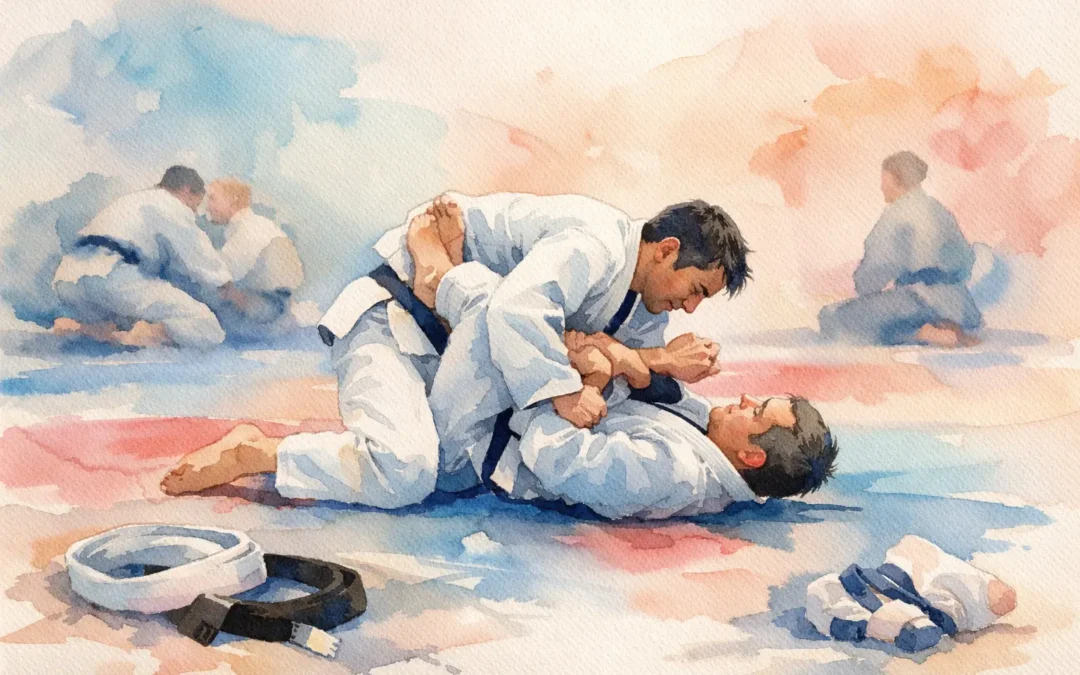
Most people know pretty quickly when a workout is hard. You leave sweaty, your breathing is up, and your muscles feel it the next day. What takes longer to figure out is whether that workout is actually worth repeating. If you have been asking, is jiu jitsu good exercise, the short answer is yes – but not just because it gets you tired. It challenges your body and your mind at the same time, which is why so many beginners stick with it longer than they stick with ordinary gym routines.
Jiu jitsu is one of those rare forms of training that can improve conditioning, coordination, mobility, and confidence in the same class. You are not just moving for the sake of movement. You are learning real skills, solving problems under pressure, and building fitness that carries over into everyday life.
Is Jiu Jitsu Good Exercise for Real Fitness?
Yes, but the kind of fitness matters. If your only definition of exercise is running on a treadmill or lifting heavier weights every week, jiu jitsu feels different. It is not built around isolated movements. It is built around full-body effort, body control, timing, and endurance.
A typical class includes a warm-up, technical instruction, drilling, and live training. That means you spend time moving in multiple directions, getting up and down from the floor, using your hips, core, legs, grip, and upper body together. Few workouts train so many physical qualities at once.
For adults, this can be a major advantage. Many people are not looking for exercise that is only about appearance. They want something engaging enough to keep them consistent, structured enough to show progress, and practical enough to feel meaningful. Jiu jitsu checks those boxes.
What Jiu Jitsu Improves Physically
The biggest fitness benefit is that jiu jitsu develops usable conditioning. During class, you work through short bursts of effort, steady movement, and moments where technique helps you conserve energy. Over time, that builds a strong mix of cardio and muscular endurance.
Strength improves too, even if class is not a weight room session. Grappling asks you to control posture, create pressure, frame against resistance, and move another person or yourself efficiently. Your grip gets stronger. Your core works constantly. Your legs and hips become more active because so much of jiu jitsu depends on positioning and balance.
Mobility is another underrated benefit. Good instruction teaches students how to move their joints through a healthy range while staying under control. Shrimping, bridging, technical stand-ups, guard movement, and rotational patterns all ask your body to move in ways that many adults simply stop practicing over time.
There is also a coordination piece that standard workouts often miss. Jiu jitsu requires timing, awareness, and precision. You learn how to connect movements instead of just repeating one machine-based pattern. That kind of athletic development is valuable for teenagers, adults, and even parents who want to stay active and capable as they get older.
The Cardio Question
People often ask whether jiu jitsu counts as cardio. It does, although it does not always feel like traditional cardio. Instead of one steady pace for 30 minutes, you get changing levels of intensity. Some rounds are explosive. Others are controlled and technical. That variation can be excellent for cardiovascular conditioning.
For many beginners, the first few classes are eye-opening. You may not think of yourself as out of shape until you spend a few minutes grappling. The good news is that your conditioning tends to improve quickly when you train consistently. Because the activity is interactive and skill-based, many people find it easier to stay motivated than they would with repetitive cardio sessions.
That said, jiu jitsu is not identical to distance running or cycling. If your goal is to maximize long-duration aerobic performance, you may still want separate cardio work. But if your goal is to improve overall conditioning in a way that also teaches skill and builds resilience, jiu jitsu is a strong choice.
Is Jiu Jitsu Good Exercise for Weight Loss?
It can be, especially when paired with good nutrition and regular attendance. Classes can burn a meaningful number of calories, but the bigger advantage is consistency. People are more likely to return to training when they enjoy the process and feel challenged in a positive way.
Jiu jitsu also keeps you mentally engaged. Instead of staring at a clock, you are focused on technique, positioning, and problem-solving. That can make hard work feel more purposeful, which often leads to better long-term habits.
Still, weight loss depends on more than one activity. If someone trains twice a week but ignores sleep, recovery, and eating habits, results may be slower. Jiu jitsu is an excellent tool, not a shortcut.
Why It Feels More Rewarding Than a Typical Workout
A lot of adults stop exercising because they get bored. The body may need movement, but the mind needs a reason to come back. Jiu jitsu gives you that reason. You are learning, adapting, and measuring progress in ways that go beyond calories burned.
One week you may finally escape a position that used to trap you. A month later, your balance is better, your breathing is more controlled, and you feel calmer under pressure. Those wins matter. They create momentum.
This is especially valuable for people who want more than a fitness class. Parents often want an activity that develops discipline and confidence for their children. Teens need challenge and structure. Adults want stress relief, self-defense skills, and a training environment that pushes them without feeling aimless. Jiu jitsu meets those needs when it is taught in a safe, organized setting.
The Trade-Offs Beginners Should Know
Jiu jitsu is good exercise, but that does not mean it is effortless or perfect for every goal. There is a learning curve. Your first classes may feel physically awkward because the movements are new. You may use too much energy early on simply because you do not yet know how to move efficiently.
There is also the recovery factor. Grappling can be demanding, especially at the start. Soreness is common. That is why beginner-friendly instruction matters. A structured academy helps students build gradually, focus on technique, and train safely rather than treating every round like a competition.
It also depends on what kind of experience you want. If you prefer solo workouts with no partner interaction, jiu jitsu may feel outside your comfort zone. But for many people, training with others becomes one of the biggest benefits. It creates accountability, support, and a strong sense of community.
Is Jiu Jitsu Good Exercise for Kids and Teens?
Absolutely, when the program is age-appropriate and well supervised. For younger students, jiu jitsu improves coordination, body awareness, balance, and focus. It gives kids a healthy outlet for energy while teaching discipline and respect.
For teens, it can be especially powerful. Many teenagers need physical training that feels challenging and relevant. Jiu jitsu builds fitness, but it also teaches composure, problem-solving, and persistence. Those lessons carry into school, sports, and everyday confidence.
Parents often appreciate that progress in martial arts is visible over time. Students do not just get tired. They become more capable, more focused, and more resilient.
Getting the Best Fitness Results From Jiu Jitsu
If your goal is to use jiu jitsu as exercise, consistency matters more than going all-out once in a while. Two or three classes a week can make a real difference in fitness, especially for beginners. Focus on learning proper technique, managing your pace, and building steadily.
It helps to support training with basic recovery habits. Sleep enough. Stay hydrated. Eat in a way that supports your energy and recovery. If you have specific strength or mobility goals, adding a little supplemental work can help, but it does not need to be complicated.
The right school also makes a major difference. Good coaching creates a safer, more productive experience. At a community-centered academy like United Martial Arts Katy, students benefit from structured instruction, certified guidance, and a culture that values discipline, progress, and respect. That kind of environment helps beginners stay consistent long enough to see the real payoff.
So, Is Jiu Jitsu Good Exercise?
Yes – for many people, it is one of the best forms of exercise because it develops fitness with purpose. It strengthens the body, improves conditioning, sharpens the mind, and teaches skills that matter beyond the mat. It is challenging, but it is also adaptable. Beginners can start where they are and improve over time with the right instruction.
If you want a workout that does more than make you sweat, jiu jitsu is worth serious consideration. The best exercise is the one that keeps you growing, keeps you engaged, and gives you a reason to come back stronger next week.


Recent Comments