

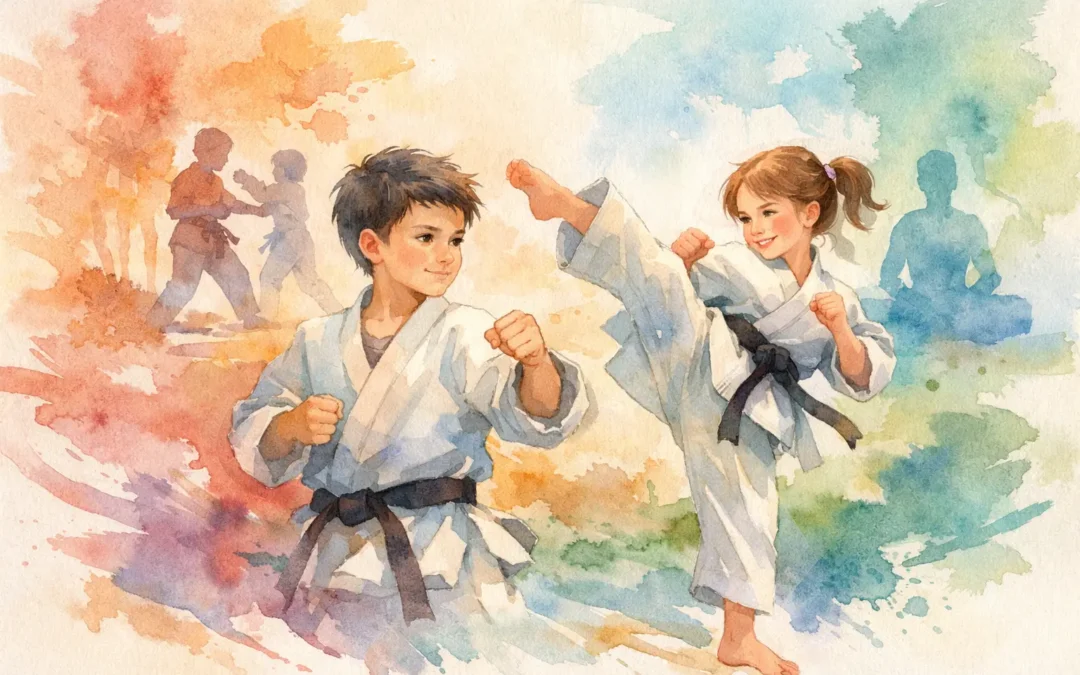
A lot of parents first notice a confidence problem in small moments. A child hangs back instead of joining the group. They avoid eye contact when spoken to. They give up quickly when something feels hard. That is why so many families ask whether martial arts build confidence in kids, and the short answer is yes – when the training is structured, consistent, and led by the right instructors.
Confidence does not appear overnight. It is built through repetition, challenge, encouragement, and earned progress. For children, martial arts can create exactly that kind of environment. In a well-run program, kids learn how to stand tall, follow directions, handle mistakes, and keep working even when something does not come easily at first. Those lessons carry far beyond the mat.
Why martial arts build confidence in kids so effectively
Many activities help children grow, but martial arts stands out because it develops the body and the mindset at the same time. A child is not just learning to kick, move, or defend themselves. They are learning self-control, awareness, and how to respond under pressure.
That matters because confidence is not the same as being loud or outgoing. Real confidence looks more like calmness. It is the ability to try, adjust, and stay composed. Martial arts helps children practice that in every class. They bow in, focus on the instructor, attempt a new skill, make corrections, and try again. Over time, those small wins begin to change how they see themselves.
There is also a major difference between praise and proof. Kids hear encouragement in many places, but confidence becomes more durable when they can point to something they have actually done. Maybe they learned a technique they once struggled with. Maybe they completed a drill they thought was too difficult. Maybe they earned a new belt after weeks of effort. Those moments tell a child, “I can do hard things,” and that belief is powerful.
Confidence starts with structure, not hype
Some parents worry that martial arts might make a shy child feel even more self-conscious. That can happen in any activity if the environment is chaotic or overly competitive. But in a strong academy, structure is what helps children settle in.
Predictable routines make a big difference. Kids know how class begins, what is expected of them, and how to improve. That consistency reduces anxiety. Instead of wondering where they fit, they learn the rhythm of the room and begin participating with more comfort.
Clear expectations also help children build trust in themselves. They learn that listening, effort, and respect are part of progress. They do not need to be the fastest or most naturally athletic student in class. They just need to keep showing up and working. For many children, that is the first time they experience a system where steady effort really pays off.
This is one reason families often see changes outside of training. A child who becomes more willing to speak up in class or try something new at school is usually responding to the confidence that comes from repeated success in a structured setting.
How physical skill changes a child’s mindset
When children feel physically capable, they often feel emotionally stronger too. Martial arts helps them understand their bodies in a new way. They improve balance, coordination, posture, and control. That physical progress can shift how they carry themselves in everyday life.
Posture alone can have a surprising impact. Kids who learn to stand with focus and awareness often look more confident because they are more confident. They are not shrinking away from attention. They are learning how to be present.
There is also reassurance in learning practical self-defense skills. Parents are not enrolling children so they can go looking for conflict. The real benefit is the opposite. A child who feels more prepared is often less fearful. They know how to stay aware, use their voice, and respond appropriately. That can reduce helplessness, which is a major confidence barrier for many kids.
Still, it depends on the child. Some gain confidence quickly through physical achievement. Others need more time and respond more to the routine, mentorship, or social connection. A good program recognizes that confidence does not look identical in every student.
Martial arts build confidence in kids through earned progress
One of the strongest confidence builders in martial arts is visible progress. Children can see where they started and where they are now. That matters because kids are more likely to believe in themselves when improvement is concrete.
Belt systems, skill benchmarks, and class milestones give children something to work toward. They learn that advancement is earned through effort, discipline, and consistency. This teaches a healthier version of confidence than constant praise. It shows them that growth is not random. It comes from practice.
That lesson is useful well beyond martial arts. At school, confident kids are not always the ones who get every answer right. Often, they are the ones who are not afraid to keep trying. Martial arts supports that kind of resilience by normalizing correction. In class, feedback is expected. Mistakes are part of learning, not evidence of failure.
For children who get frustrated easily, this can be a major turning point. They begin to understand that not getting it right the first time does not mean they are bad at it. It simply means they are still learning. That mindset shift can influence academics, sports, and everyday challenges at home.
The role of discipline, respect, and mentorship
Confidence without discipline can become arrogance. That is why the best martial arts programs teach character alongside technique. Children are expected to show respect, listen carefully, and stay accountable for their actions.
This balance is important for parents. You want your child to become more assured, but you also want them to stay coachable, safe, and respectful. Martial arts supports both. Students learn that confidence is not about dominating others. It is about controlling themselves.
Mentorship plays a big role here. Kids often respond to strong instructors who combine high standards with encouragement. When an experienced coach sees a child’s potential and helps them develop it step by step, that relationship can be transformative.
At an academy with deep roots in the community, families often value that mentorship just as much as the training itself. In Katy, many parents are looking for more than an after-school activity. They want an environment where children are challenged, guided, and treated with care. That is where experienced instruction makes all the difference.
What parents may notice after a few months
The changes are not always dramatic at first. In many cases, confidence grows quietly. A child may start answering questions more clearly. They may stop clinging at drop-off. They may recover faster after disappointment. These are meaningful signs.
Parents also often notice better focus and self-control. Martial arts asks children to manage energy, pay attention, and follow through. Those habits support confidence because kids feel more capable when they can regulate themselves.
Social confidence can improve too. Training with peers helps children learn how to take turns, communicate, and practice in a group. For some students, especially those who are reserved, that shared experience becomes a safe way to come out of their shell.
Of course, martial arts is not a magic fix for every child. If a student is dealing with deeper anxiety, bullying, or developmental challenges, progress may take more time and require support in multiple areas. But martial arts can still be a valuable part of that support system when instruction is patient, professional, and age-appropriate.
Choosing the right program matters
Not every martial arts school builds confidence in the same way. The teaching style, class culture, and curriculum all matter. A program that is too harsh can discourage beginners. One that lacks structure may not create real growth.
Parents should look for an academy that combines discipline with encouragement, keeps classes organized, and teaches children at an appropriate pace. Certified instruction, safety standards, and a welcoming atmosphere are not extras. They are essential.
It also helps when the school offers a clear path for progression. Kids build confidence more steadily when they understand what they are working on and what comes next. That sense of direction keeps them engaged and gives parents a better sense of the value of training.
For many families, the best choice is a school that treats martial arts as more than exercise. Physical fitness is part of the picture, but confidence, character, and resilience are what make the experience last.
A confident child is not one who never feels nervous. It is one who has learned how to face challenges without folding under them. Martial arts gives kids a place to practice that every week, with guidance, accountability, and real progress they can feel.


Recent Comments