

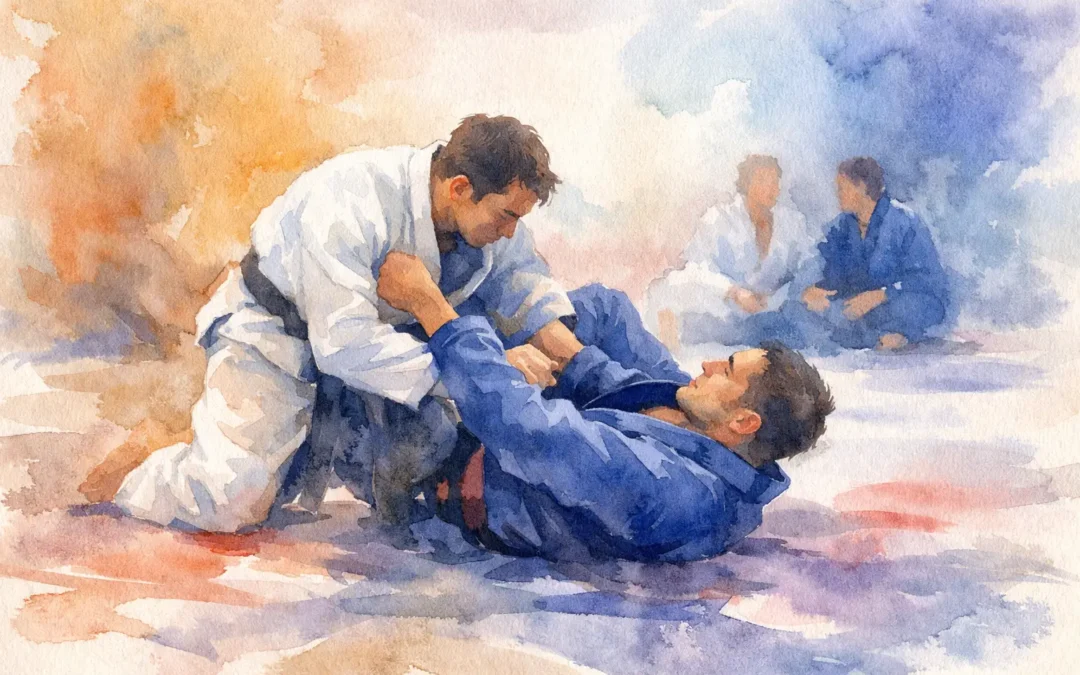
Starting Brazilian Jiu Jitsu can feel like standing at the edge of something exciting and a little intimidating. You may be wondering if you need to be in shape first, whether you are too old to begin, or if everyone else in class will already know what they are doing. The good news is simple – if you can show up ready to learn, you can start.
Brazilian Jiu Jitsu, often called BJJ, is one of the most practical martial arts for self-defense, fitness, and confidence. It teaches you how to control positions, escape bad situations, and stay calm under pressure. For adults, it offers skill-based training that is far more engaging than a standard workout. For teens and kids, it builds discipline, resilience, and respect in a structured environment.
How to start Brazilian Jiu Jitsu with the right mindset
The first step is not buying gear or memorizing techniques. It is choosing the right mindset. Beginners often think they need to be strong, flexible, or naturally athletic before they walk onto the mat. That is backwards. Training is what helps you build those qualities.
A better way to begin is to expect a learning curve. You will not understand every position in your first class. You will probably feel awkward. You may even forget the names of techniques five minutes after hearing them. That is normal. Progress in BJJ comes from repetition, coaching, and consistency, not from trying to look advanced on day one.
If your goal is self-defense, BJJ gives you a practical path. If your goal is fitness, it delivers that too. If your goal is confidence, nothing replaces the experience of solving real problems under pressure in a safe, coached setting. What matters most is having a reason to train that will keep you coming back when the early classes feel challenging.
Choosing the right academy matters
If you want to know how to start Brazilian Jiu Jitsu successfully, choose your academy carefully. A good school can make you feel challenged and supported at the same time. The wrong environment can make beginners quit before they ever get comfortable.
Look for structured instruction, clean facilities, and coaches who take the time to teach fundamentals clearly. A strong beginner program should not throw new students into chaos and hope they figure it out. It should introduce positions, movement, and etiquette in a way that builds confidence step by step.
Culture matters just as much as technical instruction. Some gyms are highly competitive. Others are more family-oriented and beginner-friendly. Neither is automatically wrong, but the best fit depends on your goals. If you are a parent looking for a positive environment for your child, or an adult who wants serious instruction without feeling overwhelmed, a school with strong mentorship and clear expectations is often the better starting point.
This is where local credibility matters. An academy with deep roots in the community, experienced instruction, and a reputation for safety usually has systems in place to help beginners develop the right way.
What to expect in your first classes
Your first few BJJ classes will probably include a warm-up, technique instruction, partner drilling, and some form of live training. Live training might mean positional sparring, where you start in a specific situation, or rolling, which is the term many schools use for sparring rounds.
Do not worry if everything feels fast at first. New students are processing a lot at once – movement, timing, terminology, and the simple fact of being close to another person while training. That initial discomfort fades quickly when the coaching is clear and the environment is respectful.
You should also expect to tap. Tapping is how you communicate that you are caught in a submission or need the action to stop. It is not losing. It is part of safe training. Beginners who learn to tap early and train under control usually improve faster because they stay healthy and relaxed enough to keep learning.
The gear you actually need
One reason BJJ is approachable is that you do not need much to begin. Many schools allow first-time students to try a class before investing in gear. For a beginner class, you may only need comfortable workout clothes if the academy provides guidance for trial students.
Once you commit, you will usually train in either a gi or no-gi uniform, depending on the class format. A gi is the traditional uniform jacket and pants. No-gi classes usually involve a rash guard and athletic shorts without pockets or zippers. Ask the school what they require before buying anything.
Good hygiene is not optional. Keep your nails trimmed, wear clean training clothes, and stay off the mat if you are sick or have a skin issue that has not been cleared. These basics protect you and your training partners and show respect for the academy.
Getting in shape for BJJ
A lot of people delay training because they want to get fit first. In most cases, that delay does more harm than good. BJJ itself is one of the best ways to build useful conditioning because it combines movement, resistance, balance, coordination, and problem-solving.
That said, your first few weeks may feel physically demanding. You will use muscles you are not used to using, and you may be tired in ways that surprise you. The answer is not to push recklessly. Train consistently, rest properly, and let your conditioning build over time.
If you are carrying injuries, returning to exercise, or starting later in life, communicate with your coach. A professional academy can help you pace your training and make smart adjustments. Starting carefully is not a weakness. It is how many people stay on the mat long enough to make real progress.
Common beginner mistakes to avoid
The biggest beginner mistake is trying to win every exchange. In your early months, your job is to learn position, posture, and control. If you rely on speed and strength before you understand technique, you will hit a ceiling quickly.
Another mistake is comparing yourself to students who have been training for years. BJJ has a way of exposing gaps in experience very honestly. That can be humbling, but it is also what makes the art so effective. Measure progress against your past self, not the most advanced person in the room.
It also helps to avoid information overload. Watching videos can be useful, but too much outside content can confuse beginners who do not yet have a foundation. Learn the core concepts your coach is teaching, repeat them often, and let your understanding build in layers.
How often should you train?
For most beginners, two to three classes per week is a strong starting point. That schedule gives you enough repetition to improve without burning out. If you train only once in a while, it is harder to retain what you learn. If you train too much too soon, your body may struggle to recover.
Consistency beats intensity in the beginning. A student who trains steadily for six months usually develops better skill and confidence than someone who trains hard for two weeks and disappears. If your schedule is busy with work, school, or family responsibilities, choose a pace you can maintain.
Why BJJ works for kids, teens, and adults
BJJ is not one-size-fits-all, but it adapts well to different age groups when taught correctly. For kids, it creates structure and teaches them how to listen, move with purpose, and handle challenges with composure. For teens, it offers productive discipline and a strong outlet for energy and stress. For adults, it provides practical self-defense, fitness, and a sense of progress that many people miss in traditional exercise routines.
That is one reason families often stay with martial arts for years. The benefits reach beyond the mat. Students carry more confidence into school, work, and everyday life.
At United Martial Arts Katy, that long-term development matters. The goal is not just to help someone survive their first class. It is to help them build skill, character, and confidence through disciplined training in a supportive community.
How to know you are ready to begin
You are ready when you are willing to be a beginner. That is really it. You do not need perfect timing, the perfect body type, or a background in sports. You need quality instruction, a safe place to learn, and the humility to keep showing up.
Some people start because they want self-defense. Others want better fitness, stress relief, or a new challenge. All of those are valid reasons. What matters is taking the first step instead of overthinking it.
If you have been asking how to start Brazilian Jiu Jitsu, the best answer is simple: find a school that values safety, structure, and student development, then step onto the mat and begin. A good first class does not ask you to be great. It asks you to be present, coachable, and ready to grow.
A few months from now, you will not be glad you waited until you felt completely ready. You will be glad you started.


Recent Comments