

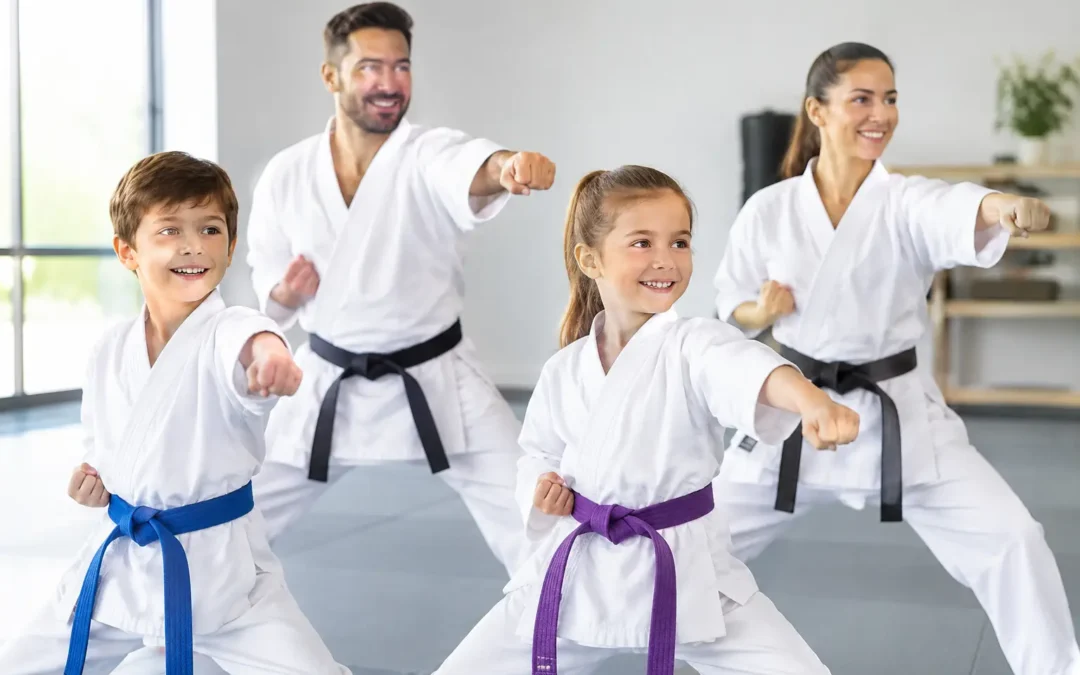
A child who walks into class quietly, avoids eye contact, and struggles to follow directions may not look like a future martial artist. A few months of consistent practice can tell a different story. That transformation is at the heart of today’s martial arts training trends: families are looking beyond activity time and choosing training that develops capable, confident people.
For children, teens, and adults alike, the strongest trend is not a flashy new workout. It is a return to purposeful instruction. People want fitness, practical self-defense, stress relief, and a community that expects their best while meeting them at their current level.
Martial Arts Training Trends Are Becoming More Purposeful
Martial arts has always offered more than punches, kicks, takedowns, or grappling technique. What has changed is the reason many families seek it out. Parents are increasingly looking for structured environments where children learn to listen, persevere through challenges, regulate emotions, and show respect. Adults want training that builds real skills while giving them a more engaging alternative to another hour on a treadmill.
This does not mean every program needs to look the same. A five-year-old developing balance and focus has different needs than a teenager building confidence or an adult learning Brazilian Jiu-Jitsu for fitness and self-defense. Effective academies recognize those differences with age-appropriate coaching, clear expectations, and progressions students can understand.
The best programs do not promise instant confidence. They help students earn it. Confidence grows when someone practices a difficult movement, receives correction, tries again, and realizes they can improve.
Skill-Based Fitness Is Replacing Random Workouts
Fitness classes remain popular, but more people are asking a practical question: what am I learning while I work out? That is why skill-based training continues to attract adults and teens. Tae Kwon Do develops mobility, coordination, speed, and lower-body strength. Wrestling builds conditioning, body awareness, and toughness. Brazilian Jiu-Jitsu combines problem-solving with full-body physical effort.
The appeal is not simply calorie burn. A martial arts class gives each drill a purpose. Footwork improves positioning. Pad work develops timing. Grappling teaches leverage and composure under pressure. Students may leave tired, but they also leave knowing what they practiced and why it matters.
Fitness-focused options such as Zumba have a place too, especially for people who want a social, high-energy way to move. The right choice depends on the student’s goals. Someone seeking music-driven cardio may thrive in a dance fitness class, while someone who wants a technical challenge may prefer a martial art. Many families benefit from having both paths available in one supportive community.
Why structured progression matters
A hard workout can feel satisfying, but effort alone does not create lasting development. Students need a path. They should know what they are working toward, what good technique looks like, and how their habits affect progress.
Rank systems, coach feedback, and regular attendance create that structure. They teach a valuable lesson: improvement is rarely dramatic from one class to the next, but it becomes clear over weeks and months. For children, that lesson carries into schoolwork and responsibilities at home. For adults, it can rebuild momentum in an area of life where progress often feels stalled.
Practical Self-Defense Is Taking Center Stage
Another major shift in martial arts training is the demand for realistic, responsible self-defense. Students and parents are not looking for fear. They want preparation, awareness, and the ability to respond with control if a situation becomes unsafe.
Good self-defense instruction begins before physical contact. It includes awareness, boundaries, verbal confidence, and knowing when to leave. Physical techniques matter, but they must be taught in context. The goal is not to encourage confrontation. The goal is to give students options and help them protect themselves when avoidance is no longer possible.
Brazilian Jiu-Jitsu is especially relevant because it teaches students how to manage distance, escape difficult positions, and use leverage rather than relying only on strength. Wrestling develops balance, takedown awareness, and the ability to stay composed during close contact. Striking arts can build distance management, discipline, and confidence. No single discipline solves every situation, which is why cross-training and thoughtful instruction are valuable.
For younger students, self-defense should be explained in clear, age-appropriate terms. They need to know who trusted adults are, how to use a strong voice, and when to get help. For teens and adults, training can include more detailed scenarios, always with safety, control, and sound judgment at the center.
Youth Programs Are Focusing on Character, Not Just Competition
Competition can be a powerful part of martial arts. It teaches athletes to prepare, perform under pressure, handle victory with humility, and learn from disappointment. Yet one of the most encouraging trends is that families no longer see competition as the only measure of success.
A student who learns to stand still when asked, makes eye contact, finishes a drill after getting frustrated, or helps a newer classmate is making meaningful progress. Those wins deserve recognition. They are the habits that shape character.
This matters for parents who worry that martial arts may be too intense for a beginner or a child who is not naturally athletic. A well-run youth class should challenge students without shaming them. It should have standards, but it should also have coaches who can redirect a distracted child, encourage a nervous beginner, and keep safety ahead of ego.
At United Martial Arts Katy, that balance between discipline and encouragement is central to the training experience. Students are expected to work, listen, and show respect. They are also supported by certified instructors and a community that understands every black belt started as a beginner.
The screen-time antidote is not more pressure
Families often turn to martial arts because children are spending too much time sitting, scrolling, or gaming. Physical training can absolutely provide a healthier outlet, but the answer is not to replace screen time with another source of pressure.
Martial arts works best when students feel ownership of the process. They should be challenged to show up, participate, and improve, while still being allowed to enjoy the friendships, games, and achievements that make class something they look forward to. Consistency follows when training becomes meaningful rather than forced.
Coaching Quality Is Becoming a Bigger Decision Factor
As martial arts grows, families are becoming more selective about where they train. They are right to be. A clean facility and a convenient schedule matter, but coaching quality has the greatest long-term effect on a student’s experience.
Strong instructors know their discipline, but technical knowledge is only the beginning. They must communicate clearly, maintain a safe class environment, correct students without discouraging them, and recognize when a drill needs to be adjusted. They also understand that a room full of beginners requires a different approach than a room of experienced competitors.
Before enrolling, observe how instructors speak to children and adults. Are students learning with focus? Are corrections specific and respectful? Is there appropriate supervision during partner drills? Do beginners have a clear entry point? These details reveal whether an academy is built for sustainable growth or short-term excitement.
Technology Can Support Training, but It Cannot Replace the Mat
Video instruction, online scheduling, progress tracking, and slow-motion technique review are useful additions to modern training. They can help students remember details between classes and give parents a better view of their child’s progress. For busy adults, digital tools can also make attendance easier to manage.
Still, martial arts is learned through coached repetition and real human feedback. A video cannot feel whether a student is off-balance during a takedown. An app cannot replace the trust developed with a training partner. Technology should support the academy experience, not become a substitute for it.
The same principle applies to social media. Highlight videos can inspire someone to start, but they rarely show the steady work behind the moment: warmups, drilling fundamentals, correcting mistakes, and returning after a difficult class. Real progress is less dramatic than a highlight reel, and far more valuable.
Choosing the Right Trend for Your Goals
Not every martial arts trend will serve every student. A competition-focused path may motivate one teen and overwhelm another. Intense conditioning may be exactly what an adult wants, while a parent may prioritize a child’s confidence and behavior first. The right program starts with an honest conversation about goals, experience, schedule, and comfort level.
Look for instruction that gives beginners room to learn, experienced students room to advance, and families a reason to stay involved. The most valuable trend is not the newest one. It is training that helps people become stronger in body, steadier in mind, and more confident in the way they meet everyday challenges.
The first class is simply a starting point. Show up ready to learn, stay consistent when progress feels slow, and let disciplined practice reveal what you or your child can become.


Recent Comments