

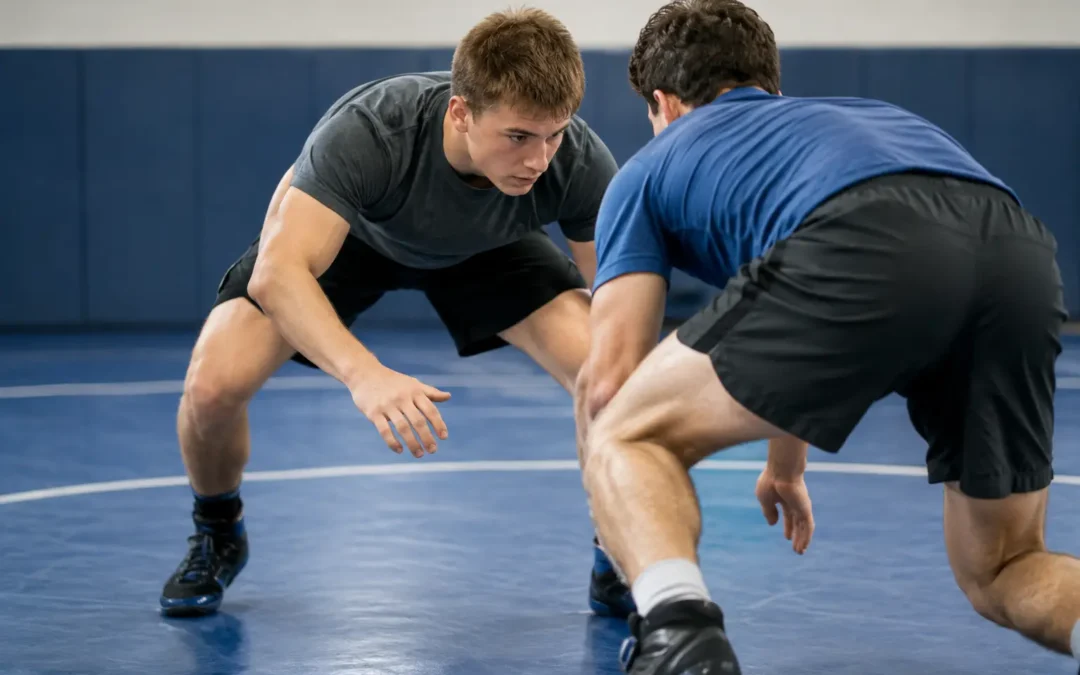
A takedown does not begin when an athlete reaches for a leg. It begins with stance, distance, balance, and the ability to react without losing position. That is why effective wrestling technique drills do more than make students tired. They teach the small, repeatable movements that create control under pressure.
For kids, teens, and adults, drilling is where confidence is built safely. A student who understands how to level change, move their feet, protect their position, and finish with control is far more prepared than someone who only tries to win fast during live rounds. The goal is not to collect moves. The goal is to build disciplined habits that hold up when the pace increases.
Start With Position Before Speed
Wrestling rewards athletes who can stay balanced while moving. Before practicing a double-leg, single-leg, snap-down, or stand-up, students need a reliable stance. Their feet should be active but not crossed, knees bent, hips underneath them, chest up, and hands ready to defend or create contact.
A simple stance-and-motion drill is one of the best places to begin. Students move forward, backward, and laterally on command while keeping their base. They should avoid bouncing too high, reaching with their feet, or letting their hands fall. For younger students, a coach can make this drill engaging by calling colors, directions, or numbers. For older athletes, add a partner who mirrors the movement and maintains proper distance.
The value is easy to miss because the drill looks basic. But poor footwork creates poor entries, and poor entries put athletes in vulnerable positions. A strong stance gives every later technique a better foundation.
The stance-circle drill
Have two partners face each other inside a marked circle. One athlete leads with controlled movement while the other mirrors, trying to remain square and centered. Neither athlete attempts a takedown at first. The focus is posture, distance, and maintaining a ready position.
After students can stay disciplined, allow light hand fighting. The rule is simple: no reaching so far that the shoulders drift beyond the knees. This teaches athletes to use their feet to close distance instead of leaning and hoping.
Wrestling Technique Drills for Better Entries
Many beginning wrestlers shoot from too far away or drop to a knee without moving their opponent first. Good entries solve that problem. They teach students to change levels, create an angle, and connect their hands before their opponent has time to defend.
Penetration steps with a finish
The penetration step is one of the most valuable movement patterns in wrestling. From stance, the athlete lowers their level by bending the knees, steps between the opponent’s feet, drives forward with the trail leg, and keeps their head and chest in a safe, strong position.
Start without a partner. Students should take one clean penetration step, recover to stance, and repeat on both sides. Quality matters more than quantity. A rushed repetition with a knee crashing into the mat, hands dropping, or back rounding should be corrected before adding speed.
Next, use a partner holding a target such as a padded shield or their hands at appropriate shoulder level. The wrestler practices entering, wrapping the legs or body position correctly for the intended finish, then driving through with control. This progression helps students connect footwork to a realistic target without immediately turning the drill into a hard takedown.
Level change and touch
For this drill, partners stand at a safe distance. One athlete level changes and lightly touches the outside of the partner’s knee or shin without stepping in recklessly. They immediately return to stance. The partner remains alert and may move lightly, forcing the shooter to time the motion.
This drill develops range awareness. It also teaches a critical lesson: lowering level is not the same as bending at the waist. The back stays strong, the eyes stay up, and the legs do the work.
Setup-to-shot combinations
A clean shot often follows a useful setup. Students can practice a light collar tie and wrist control, then use a snap, pull, or push to create a reaction before taking a penetration step. The purpose is not to yank a partner off balance. It is to feel how an opponent’s posture changes and choose the right moment to enter.
Keep the sequence short at first: establish contact, create a reaction, take one controlled shot, and reset. As students improve, coaches can vary the setup. A smaller athlete may rely more on timing and angles, while a stronger athlete still needs to avoid forcing an entry from a bad position.
Drills That Build Defense and Recovery
Offense earns points, but defense keeps athletes composed. Students should learn that a defended shot is not automatically a failure. With the right reaction, they can recover stance, create a front headlock opportunity, or circle back to neutral.
Sprawl and circle
One partner gives a controlled shot at reduced speed. The defender throws their legs back, lowers their hips into the opponent’s upper back area without driving weight dangerously, and keeps their chest pressure forward. Then they circle away from the attack rather than staying directly in front of it.
The key coaching point is to sprawl with the hips, not by folding forward. A student who reaches for the mat with their hands and leaves their hips high may still get taken down. Start slowly enough that both partners can learn safe body placement. Increase pace only when the defender can sprawl, balance, and circle with control.
Down-block and go-behind
The down-block is a fast response when an opponent reaches for a leg. The defender lowers their hand to block the shoulder or upper back line while moving their legs away. From there, they circle to the rear position for a controlled go-behind.
This drill is especially useful for athletes who panic when someone attacks their legs. Repetition replaces panic with a clear sequence: block, move, circle, secure position. Younger wrestlers should practice the movement first, then add light resistance as their awareness improves.
Stand-up and hand control
Bottom position requires patience and urgency at the same time. A basic stand-up drill teaches athletes to build a strong base, get one foot under them, rise without exposing their back, clear the opponent’s hands, and turn to face.
Partners should begin with cooperative resistance. The top wrestler applies realistic but controlled hand pressure, allowing the bottom wrestler to feel where the grips are. As skill develops, the top wrestler can resist the stand-up more actively. The bottom athlete should not simply sprint forward. The finish matters: clear the hands and face the opponent before resetting.
Use Live Drilling With a Purpose
Live wrestling has a place, but it should not replace technical repetition. The best practice sessions move from learning to drilling to situational resistance. That progression lets students build confidence without reinforcing sloppy habits.
Situational rounds are particularly effective. Instead of starting every round from neutral, begin in a single-leg position, a front headlock, a bottom stand-up position, or with one athlete defending a shot. Give each athlete a clear objective and keep the round short. A 20- or 30-second round creates urgency while keeping the lesson focused.
For example, one wrestler may have 30 seconds to finish a single-leg, while the other works only on balance, hand fighting, and defense. Then they switch. This approach gives students more meaningful repetitions than a full round where the same experienced athlete controls every exchange.
Safety and Training Standards Matter
Wrestling is demanding, but productive training should be disciplined, not reckless. Partners must be matched thoughtfully by size, maturity, and experience whenever possible. New students need clear expectations for contact, finishes, and tapping or stopping when something feels unsafe.
Technique should be practiced on proper mats under qualified supervision. Coaches should correct dangerous habits early, including twisting knees during takedown finishes, driving an opponent into the mat without control, or placing pressure on the neck. Students also need regular reminders that a good training partner is not someone who goes hard every repetition. It is someone who helps both athletes improve.
Parents often appreciate that well-structured wrestling instruction develops more than athletic ability. Children learn to listen, reset after mistakes, respect training partners, and stay composed in challenging situations. Adults gain practical conditioning, sharper body awareness, and an outlet that demands full focus.
At United Martial Arts Katy, quality instruction means giving each student a path to improve at the right pace. The athlete who practices a clean stance, a disciplined penetration step, and a controlled sprawl week after week will carry more confidence into every round than the athlete searching for a shortcut. Show up ready to learn, train with purpose, and let the fundamentals become your advantage.


Recent Comments