

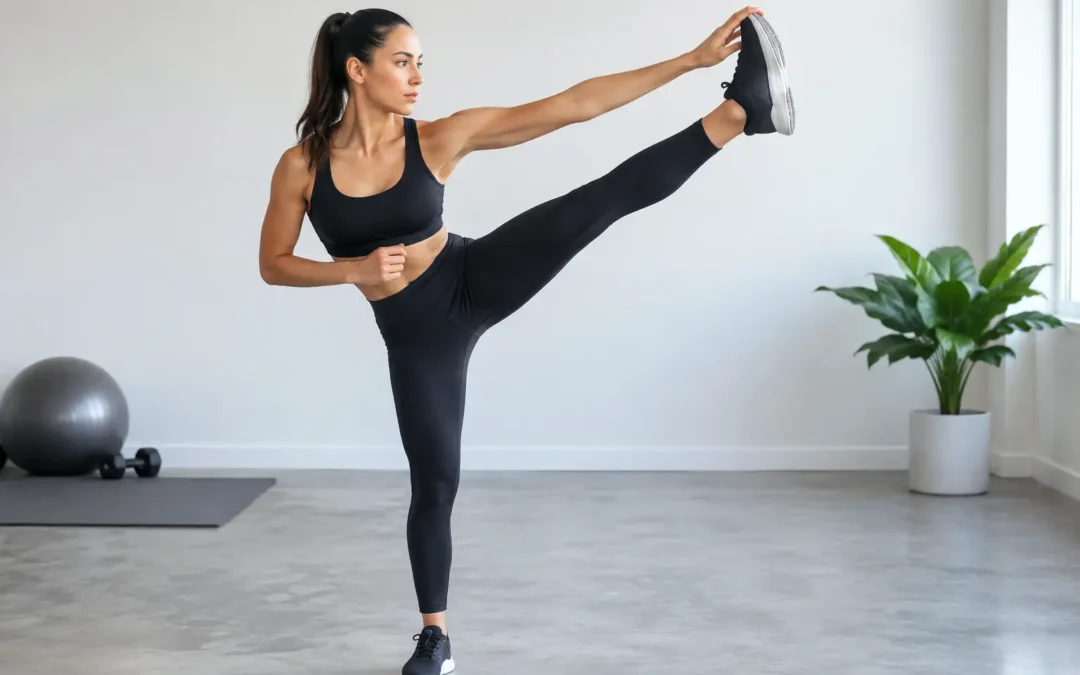
A head-high kick is not earned by forcing your leg upward at the end of class. It comes from mobility, strength, balance, and consistent technical practice. If you are learning how to improve kicking flexibility, the goal is not simply to stretch farther. The goal is to control your range of motion so your kicks are higher, cleaner, and safer.
For children, teens, and adults, flexibility develops at different rates. Some students can place their palms on the floor but struggle to hold a chambered roundhouse kick. Others may not look especially flexible yet produce powerful, controlled kicks because they have built strong hips and a stable core. Martial arts training should develop both.
Why Kicking Flexibility Is Different From Regular Flexibility
Kicking asks your body to move through a large range of motion while standing on one leg, maintaining posture, and generating force. That is a much different demand than sitting in a split or touching your toes.
A front kick depends heavily on hamstring length, hip flexor control, and the ability to keep the supporting leg stable. A roundhouse kick requires hip rotation and strength through the glutes and core. Side kicks and hook kicks challenge the adductors, or inner-thigh muscles, while demanding precise balance.
This is why passive stretching alone has limits. If you can pull your leg high with your hands but cannot lift and hold it there yourself, you have range but not usable kicking flexibility. The most effective training combines mobility with active strength.
How to Improve Kicking Flexibility With Consistent Training
Flexibility responds best to steady practice, not occasional extreme sessions. Two or three focused mobility sessions per week can create meaningful progress, especially when paired with regular martial arts classes. A short daily routine can also work well, provided you stay patient and avoid pushing into pain.
Expect gradual change. Adults who spend much of the day sitting may need extra attention on tight hip flexors and hamstrings. Growing students can feel temporarily stiff during growth spurts. Previous injuries, joint structure, and training history also affect how quickly a person gains range. Progress should be measured by cleaner technique and better control, not by comparing your kicks to someone else’s.
Warm Up Before You Stretch
Never begin a flexibility session with cold muscles. Spend five to 10 minutes raising your body temperature first. Light jogging, jump rope, marching knees, shadowboxing, or easy kicking drills are all effective choices.
Then use dynamic mobility. Move smoothly through a comfortable range rather than holding long stretches. Leg swings forward and back can prepare for front kicks, while controlled swings across the body and out to the side prepare the hips for roundhouse and side kicks. Keep the torso tall and hold a wall or partner station if balance is still developing.
Dynamic work tells the nervous system that the movement is safe. It also gives you a chance to notice which side feels restricted before you begin more demanding drills.
Build Active Range, Not Just Loose Muscles
After warming up, practice lifting your leg under control. This is where flexibility starts to become a martial arts skill.
For front-kick control, chamber the knee high, extend the foot slowly, retract it, and set it down without leaning backward. For roundhouse control, raise the knee to the side, rotate the hip, extend slowly, and return to chamber. Use a wall lightly for support at first, but do not hang your weight on it.
Slow kicks may feel surprisingly difficult. That is normal. They expose weaknesses in the hip flexors, glutes, and core that fast kicks can hide. Start at a height you can own with good posture. A controlled waist-height kick is more valuable than a shaky head-height kick.
Stretch the Areas That Limit Your Kicks
A balanced routine should address the muscles most often involved in kicking: hamstrings, hip flexors, glutes, inner thighs, and calves. Do not assume one stretch fits every kick.
After class or a separate warm-up, use gentle static stretches. Hold each position for roughly 20 to 40 seconds while breathing steadily. You should feel tension, not sharp pain, numbness, pinching, or a burning sensation in a joint. Back off immediately if your body gives those signals.
For hamstrings, try a standing or seated stretch with a long spine rather than folding your back to reach farther. For hip flexors, use a half-kneeling lunge and gently tuck the pelvis instead of arching the lower back. For inner thighs, a wide seated position or a supported butterfly stretch can be useful. A figure-four stretch may help release the outer hip and glute area that can restrict rotation.
The split is a useful benchmark for some martial artists, but it is not a requirement for effective kicking. Chasing a full split too aggressively can irritate the groin or hamstring. Train the range your techniques require first, then treat deeper flexibility as a long-term goal.
Strength Makes Higher Kicks Safer
Many students hit a flexibility plateau because the body does not feel strong enough to control a new range. Strength training solves part of that problem.
Single-leg balance drills, bodyweight squats, lunges, glute bridges, and controlled core exercises build the foundation for stable kicking. For martial artists, standing knee holds are especially valuable. Raise the knee to chamber height, keep the supporting foot grounded, and hold for several seconds without twisting or collapsing at the waist.
You can also use a slow lowering phase. Lift a knee as high as you can with control, extend the leg partway, then lower it slowly. This teaches the muscles to support the kick rather than relying on momentum. Keep repetitions modest when starting. Quality matters more than fatigue.
For young students, these drills should stay playful and technique-focused. For adults, particularly those returning to exercise, gradual strengthening protects the knees, hips, and lower back while flexibility improves.
Train Your Technique Alongside Your Mobility
A higher kick is not always a better kick. In Tae Kwon Do and self-defense training, the right target height depends on distance, timing, balance, and the technique being used. A fast, accurate mid-level kick can be more practical than a high kick that leaves you exposed.
Good mechanics also make a kick look and feel higher. Pivoting the supporting foot on a roundhouse creates room for hip rotation. Keeping the knee chambered prevents the leg from swinging wide. Maintaining a tall posture helps you avoid stealing range from the lower back. Certified instruction matters because small adjustments can prevent poor habits from becoming painful ones.
Train both sides, even if one leg is clearly more flexible. Your non-dominant side may improve more slowly, but regular practice builds coordination, confidence, and a more balanced stance. Give the tighter side a little extra attention, not double the intensity.
Avoid the Mistakes That Cause Setbacks
The fastest way to slow flexibility progress is to force it. Bouncing at the bottom of a stretch, pushing through sharp discomfort, or having a partner press aggressively on your leg can strain tissues that need time to adapt.
Avoid doing deep static stretches immediately before explosive kicking or sparring. Use a dynamic warm-up before training, then save longer holds for afterward. Also pay attention to recovery. Sleep, hydration, and rest days affect how well muscles respond to training.
If you have persistent hip, groin, knee, or lower-back pain, do not try to stretch your way through it. A qualified medical professional can help identify the issue, and your instructor can modify drills while you recover. Discipline includes knowing when to train hard and when to train smart.
A Simple Weekly Approach
A practical schedule is regular martial arts training, brief dynamic mobility before each session, and two or three post-training flexibility sessions each week. Add a few minutes of active kick holds and slow controlled kicks on days when you feel fresh.
Keep a simple record of your progress. Notice whether your chamber is higher, your supporting leg is steadier, or your kick reaches the target with less leaning. Those changes often appear before a dramatic increase in height.
At United Martial Arts Katy, students build kicking flexibility in the context that matters most: safe, structured training that develops technique, confidence, and discipline together. Stay consistent, respect your current limits, and let each controlled repetition move you closer to the kick you want to throw.


Recent Comments