

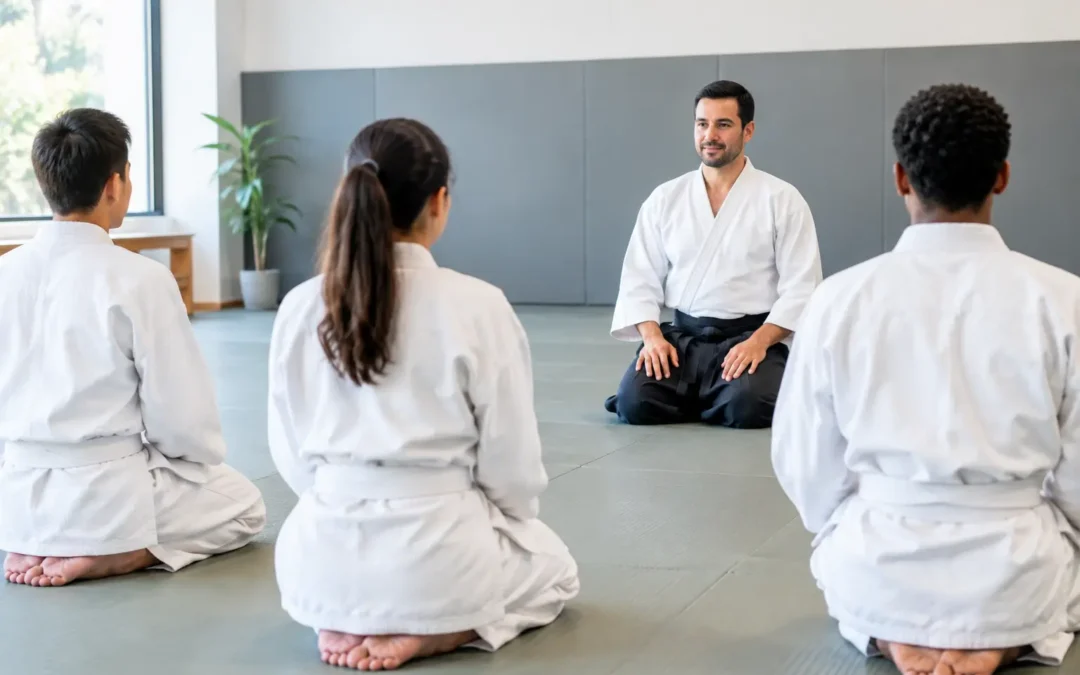
The first time you step onto the mat, you may not know where to stand, when to bow, or how hard to train with a partner. That is normal. A martial arts class etiquette guide gives beginners a clear starting point, but the bigger goal is simple: help every student train safely, show respect, and become a dependable part of the team.
At a quality academy, etiquette is not about making new students feel nervous or forcing them to memorize rituals. It creates order in a room where people are learning challenging skills together. For children, it builds discipline and awareness. For teens and adults, it helps create focused training, safer partner work, and the confidence to keep improving.
Why Etiquette Matters on the Mat
Martial arts are hands-on. Students may practice throws, strikes, takedowns, joint-control techniques, or close-contact grappling. That requires trust. When everyone follows the same expectations, class can move with purpose instead of confusion.
Respect also goes beyond saying “yes, sir” or bowing at the door. It means listening when instruction begins, controlling your technique when working with a newer partner, and accepting feedback without excuses. Those habits strengthen character just as surely as drills strengthen balance, coordination, and conditioning.
Etiquette can look a little different between Brazilian Jiu-Jitsu, Tae Kwon Do, and wrestling. A BJJ class may have specific rules about hygiene and moving around training pairs. Tae Kwon Do may place more emphasis on line formation, formal commands, and traditional bows. Wrestling classes may be less formal in appearance but still demand focus, toughness, and respect for coaches and partners. Your instructor’s rules always come first.
Arrive Ready to Train
Showing up a few minutes early is one of the easiest ways to demonstrate respect. It gives you time to check in, use the restroom, fill your water bottle, and get your uniform or training clothes in order without disrupting the start of class.
If you are late, do not rush onto the mat and join the nearest drill. Wait for the instructor to acknowledge you, then enter as directed. Most coaches understand that work, school, and Katy traffic can create delays. The issue is not a rare late arrival. The issue is treating the beginning of class as optional.
Come clean, with trimmed fingernails and toenails, especially for grappling classes. Wear a clean uniform, rash guard, or approved athletic clothing. Remove jewelry before training, including rings, watches, necklaces, and dangling earrings. These details protect both you and the people training beside you.
If you have a cut, rash, illness, or any condition that could affect others, tell the instructor before class. The right decision may be modified training or sitting out for the day. Missing one session is far better than risking your health or a teammate’s health.
For Parents: Build the Routine Before Class Starts
Children learn etiquette faster when the routine is predictable. Help your child arrive with a full water bottle, a clean uniform, and enough time to settle in. Encourage them to use the restroom before class and to leave toys, snacks, and electronics off the mat.
Parents can support the coaching environment by allowing instructors to lead during class. A child may need a few weeks to become comfortable with the structure, especially if martial arts is their first organized activity. Consistency and calm encouragement make a real difference.
Follow the Instructor’s Lead
When class begins, give the instructor your eyes and attention. Side conversations, practicing a different move, or checking a phone can cause a student to miss a key safety detail. In martial arts, a small adjustment in posture or hand placement can change whether a technique works safely.
Ask questions when you need help, but choose the right moment. If the instructor is demonstrating, watch first. If your question is personal or would interrupt the entire group, raise your hand or wait until the demonstration ends. Good questions show that you are engaged. Repeatedly talking over instruction shows that you are not ready to learn.
Do not assume that watching a move once means you should perform it at full speed. Start slowly. Your coach may ask the class to drill with light resistance, then build toward more realistic movement. That progression is intentional. Control comes before intensity.
Train With Partners, Not Against Them
A training partner is not an obstacle between you and your next belt. They are helping you develop timing, technique, resilience, and composure. Treat them accordingly.
Before drilling, introduce yourself if you have not met. When practicing, match your effort to the assignment and to your partner’s experience level. A larger, stronger, or more advanced student has a responsibility to use control. A beginner has a responsibility to listen, stay composed, and avoid turning every round into a wild scramble.
In Brazilian Jiu-Jitsu and wrestling, tap early when caught in a submission or uncomfortable position. Tapping is not failure. It is clear communication that allows both students to train again tomorrow. Release immediately when a partner taps, verbally submits, or the instructor calls time.
In striking-based classes, do not increase contact simply because you feel competitive. Follow the coach’s instructions for distance, speed, and protective gear. Controlled sparring builds skill. Uncontrolled sparring builds fear, injuries, and bad habits.
If a partner is making you uncomfortable, using too much force, or ignoring safety rules, speak up respectfully and tell the instructor. Students should never feel pressured to accept unsafe training to prove they belong.
Keep the Training Space Respectful
The mat is a shared space. Keep food, gum, and drinks where the academy directs. Put shoes in the designated area and avoid wearing them on training surfaces. If you need to step off the mat for the restroom or outside area, follow the academy’s policy before returning.
Keep language constructive. Martial arts training can be demanding, and everyone has difficult days. Still, there is a difference between being challenged and being put down. Encourage teammates, especially newer students. A simple “good job” after a tough round can help someone return with more confidence next class.
Respect rank and experience without becoming intimidated by them. Higher-ranked students have invested time in developing their skills and should be treated with courtesy. At the same time, every white belt, young child, and first-time visitor deserves patience. Strong academies develop leaders, not gatekeepers.
Handle Wins, Losses, and Corrections With Maturity
You will have great rounds. You will also get swept, pinned, corrected, or outperformed by someone smaller than you. That is part of the process. Your response matters more than the result.
Avoid celebrating in a way that embarrasses a training partner. Likewise, avoid blaming your partner, the rules, or a minor inconvenience when a drill does not go your way. A disciplined student asks, “What can I improve next time?” That mindset turns setbacks into progress.
Corrections from an instructor are not personal criticism. They are coaching. Whether the feedback is about your stance, your focus, or how you interact with teammates, receive it with attention and apply it. Students who stay teachable improve faster than students who need to be right.
For parents, this lesson is especially valuable. Praise effort, listening, and perseverance rather than only belts, trophies, or wins. Those are the habits that carry into school, home, and future challenges.
A Martial Arts Class Etiquette Guide for Every Rank
The expectations do not disappear once you feel comfortable. In fact, this martial arts class etiquette guide becomes more meaningful as your skills grow. Advanced students set the temperature of the room. New students notice how they warm up, how they respond to coaching, and how they treat people who know less than they do.
You do not need to be loud to lead. Arrive prepared. Train with control. Help a teammate understand a drill when invited to do so. Thank your coach after class. Clean up your space. Those actions show discipline, honor, and excellence in a way that others can see.
At United Martial Arts Katy, students of every age are encouraged to train with confidence while respecting the people who share the journey. The goal is not perfection on day one. It is becoming the kind of student and teammate who helps make every class safer, stronger, and more focused.
The next time you step on the mat, choose one habit to improve: arrive earlier, listen more closely, control your pace, or encourage a partner. Small acts of respect become the foundation for lasting skill and character.


Recent Comments