

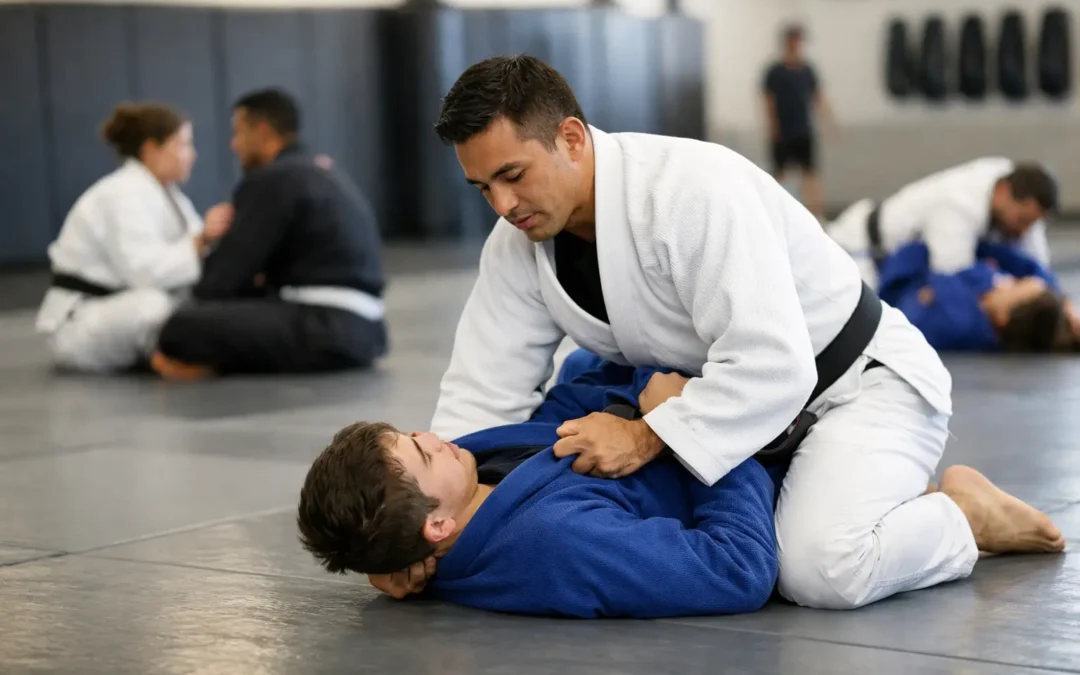
A Brazilian jiu jitsu class review should tell you more than whether students looked tired or the mats looked clean. The real question is whether a class gives beginners a safe, structured path to build practical skill, confidence, fitness, and discipline over time. For parents, adults, and teens considering training, the quality of that first experience can reveal a great deal about the academy’s standards.
Brazilian Jiu-Jitsu, often called BJJ, is a grappling-based martial art that teaches students how to control distance, escape unfavorable positions, and apply submissions when appropriate. It is physically demanding, but it does not need to be intimidating. A strong program meets new students where they are while steadily asking more of them as their skills grow.
What a Brazilian Jiu Jitsu Class Review Should Examine
The best way to evaluate a BJJ class is not to judge it by how hard people roll or how many advanced techniques appear in an hour. Look instead for purposeful instruction, attentive coaching, responsible training habits, and a culture where every student is expected to learn with respect.
A clear structure from warm-up to practice
Quality classes have a plan. Students should understand what they are working on and why it matters. A class may begin with movement drills that prepare the body for grappling, followed by a technique demonstration, guided partner repetitions, and controlled live practice or positional rounds.
For a beginner, this structure removes much of the uncertainty. Rather than being told to “figure it out” against a more experienced partner, a new student learns a specific movement, practices it at a manageable pace, and gets a chance to use it in context. That progression builds retention and confidence.
The warm-up should also serve a purpose. In BJJ, movements such as hip escapes, bridges, technical stand-ups, and controlled falls are not filler. They develop body awareness and reinforce the positions students will encounter during training. A good instructor explains the connection instead of treating the warm-up as punishment.
Instruction that works for true beginners
A beginner-friendly class does not mean an easy class. It means the instructor can make complex ideas understandable. Strong coaching breaks a technique into a few key details: where to place the hands, how to position the hips, what direction to move, and what common mistake to avoid.
Watch whether the instructor demonstrates from more than one angle and gives students time to ask questions. Notice whether coaches circulate during drilling. A student may nod during a demonstration yet struggle as soon as a partner adds resistance. Individual corrections are where learning becomes personal.
This matters especially for adults returning to exercise after years away, as well as children who are still developing coordination and focus. The best instructors challenge students without making them feel embarrassed for needing repetition.
Safety is visible, not assumed
BJJ is a close-contact sport, so safety standards must be part of the culture every day. Students should be taught to tap early when a submission or pressure becomes uncomfortable. Partners should release immediately. Coaches should supervise live training and match intensity appropriately, especially when there is a significant difference in size, age, or experience.
Clean mats, trimmed nails, clean uniforms, and basic hygiene expectations matter too. They reflect respect for training partners and help protect the health of the entire team. An academy does not need to feel overly formal, but its rules should be clear and consistently enforced.
For parents, ask how children are grouped and supervised. Kids need instruction designed for their stage of development, not an adult class simplified with louder instructions. They benefit from games and drills that build balance, listening skills, coordination, and confidence alongside technical foundations.
The Culture You Feel on the Mat
A BJJ gym can have excellent athletes and still be a poor fit for a family or a first-time student. Culture determines whether people stay long enough to gain the benefits of training.
The right environment is respectful without being soft. Students greet one another, experienced members help newer teammates, and instructors set expectations for discipline. People train hard, but they are not trying to prove something at a beginner’s expense. A tough round can be valuable. A reckless round is not.
During a trial class, pay attention to how students respond when someone makes a mistake. Do teammates offer a useful tip? Does the instructor correct the issue calmly? Are smaller or newer students included in drills rather than left on the sidelines? Those details show whether an academy values mentorship as much as performance.
At United Martial Arts Katy, that standard extends beyond technique. Martial arts training is an opportunity to develop self-control, resilience, honor, and the confidence to face difficult situations with a clear mind. Those lessons become meaningful when they are practiced consistently in a supportive community.
What Live Training Should Look Like
Live training, often called rolling, is where BJJ becomes real. It lets students test timing, balance, composure, and decision-making against an active partner. It is also the part of class that can concern beginners most.
A well-run program introduces resistance gradually. New students may begin with positional rounds, where both partners start from a defined situation such as side control or guard. This gives them a focused objective instead of asking them to manage every possible position at once. As confidence and knowledge improve, they can take on more open-ended rounds.
Not every class requires hard sparring. The intensity should depend on the student’s age, experience, fitness level, and goals. Someone training for competition may need demanding rounds. An adult focused on fitness, self-defense, and stress relief still needs quality practice, but should be able to train intelligently and return home healthy.
The most valuable sign is control. Advanced students should be able to work with beginners safely, using their skill to create learning opportunities rather than overwhelming them. That restraint is not a lack of ability. It is evidence of it.
Progress Is More Than a Belt
Belts are meaningful milestones in Brazilian Jiu-Jitsu, but they are not the only measure of success. A worthwhile class helps students notice progress in everyday ways: getting up with better balance, staying calm under pressure, learning to set boundaries, improving conditioning, or returning after a difficult day with a stronger mindset.
For children, progress may look like better listening, more patience, and the willingness to keep trying after a mistake. For teens, it can mean confidence without the need to show off. Adults often discover that the consistency of training becomes as valuable as the techniques themselves.
Ask how the academy tracks advancement and what students are expected to learn at each stage. Clear standards create motivation because students know what they are working toward. At the same time, promotion should reflect real development, not simply time spent paying dues.
Questions Worth Asking Before You Enroll
A trial class is the right time to ask practical questions. Find out whether the academy has dedicated beginner, children’s, teen, and adult options; how often students can attend; what equipment is required; and whether coaches can accommodate prior injuries or fitness limitations.
You should also ask what happens after the first few classes. Is there a clear onboarding process? Will a beginner know which classes to attend? Is there a pathway from basic movement to more advanced training? The answers should be direct, not vague sales language.
Cost and schedule matter as well. The best program is one you can attend consistently. A nearby academy with qualified instruction and a schedule that works for your family is often a better long-term choice than a more distant gym you rarely visit.
A productive first class may leave you tired, challenged, and slightly outside your comfort zone. It should not leave you confused, ignored, or worried that training is unsafe. Give yourself permission to be new, ask questions, and look for a team that takes your progress seriously. The right BJJ class does more than teach you how to grapple – it gives you a disciplined place to become stronger, steadier, and more confident each week.


Recent Comments