

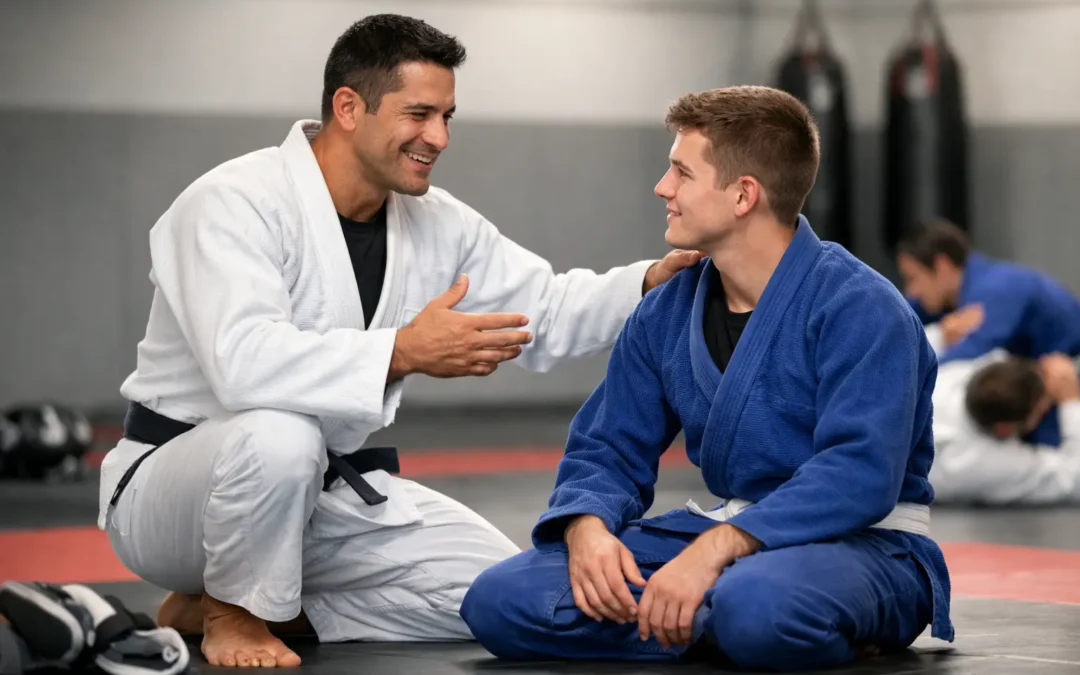
The first time you step onto a jiu-jitsu mat, you may be surprised by how quickly training becomes close-contact. You will grip, move, fall, and work through unfamiliar positions with training partners. That is exactly why learning how to start jiu jitsu safely is about more than buying a uniform and showing up. The right start builds confidence, protects your body, and gives you the discipline to improve one class at a time.
Brazilian Jiu-Jitsu is one of the most practical martial arts for self-defense, fitness, and problem-solving under pressure. It is also a technical sport. Beginners do not need to be strong, flexible, or experienced, but they do need a quality environment, clear instruction, and the willingness to train with control.
Choose an Academy That Makes Safety a Standard
A good academy does not treat safety as an afterthought. Before joining, watch how instructors manage the room. Are beginners given clear direction? Do higher-ranked students help newer students learn without overwhelming them? Is there a respectful culture around tapping, hygiene, and controlled sparring?
The best instructors explain not only what to do, but why a movement works and when to stop. They group students appropriately, correct unsafe habits early, and make sure no one feels pressured to prove themselves in their first week. This matters for children and adults alike. A child needs structure and supervision; an adult needs a pace that supports long-term progress rather than a painful first month.
A trial class is your opportunity to assess the academy as much as it is the academy’s opportunity to meet you. Ask how beginner classes are structured, whether new students are paired with experienced partners, and what the school expects regarding hygiene and safety. A welcoming room should still have standards. Discipline, respect, and control are not optional in jiu-jitsu.
How to Start Jiu Jitsu Safely: Begin at Your Pace
Many new students walk in with one of two ideas: they will either be naturally good at it or they will be completely lost. Neither one matters. Your job during the first few classes is to listen, learn the basic positions, and become comfortable moving on the mat.
Start by telling your instructor about old injuries, current pain, surgeries, or medical concerns. This is especially important if you have a history of knee, shoulder, neck, or back issues. Most people can adapt jiu-jitsu training to their needs, but modifications should be guided by a qualified instructor and, when appropriate, your healthcare professional.
Do not feel obligated to match another student’s pace. Conditioning will improve, but trying to push through exhaustion can make technique sloppy. Sloppy technique is where many preventable bumps, strains, and awkward movements begin. Take a short rest, get water, and return when you can move with attention and control.
For most adults, two beginner classes per week is a strong starting point. It gives your body time to recover while creating enough repetition to remember what you learned. Children may benefit from a consistent weekly schedule that supports routine without overloading school, family time, and other activities. The right frequency depends on age, fitness level, and recovery, not enthusiasm alone.
Learn the Tap Before You Learn the Submission
Tapping is one of the most important skills in Brazilian Jiu-Jitsu. A tap means, “Stop.” It is not an admission of failure, and it is never something to ignore or delay out of pride.
You can tap your partner several times with your hand, tap the mat, or say “tap” clearly if your hands are unavailable. Tap early when a joint lock is tight, a choke is beginning to take effect, or a position causes sharp pain or panic. Your partner should release immediately. You should do the same every time someone taps, even during light practice.
There is a difference between normal training discomfort and pain that signals a problem. Working hard may leave you breathing heavily, and certain positions can feel uncomfortable. Sharp pain, numbness, dizziness, popping sensations, or pain that changes the way you move are reasons to stop and speak with your instructor. Training through an injury is rarely a sign of toughness. Smart martial artists protect their ability to train next week, next month, and next year.
Pick Training Partners Who Help You Learn
Your partner can make a major difference in your first jiu-jitsu experience. Early on, train with people who are calm, controlled, and willing to let you practice. A good partner does not need to “win” every round. They help create the right amount of resistance for you to understand the technique.
Whenever possible, try to work with someone close to your size, especially during your first few sessions. Size is not the only factor – experience, temperament, and control matter just as much. A skilled larger partner may be safer than an inexperienced person who moves recklessly. Let your instructor know if a pairing feels unsafe or uncomfortable. That is responsible communication, not complaining.
Avoid turning every drill into a competition. Positional sparring and rolling are valuable, but beginners should focus on breathing, posture, balance, and awareness. You do not need to use maximum strength to make progress. In fact, gripping too hard and fighting every movement usually causes faster fatigue and less learning.
Build Safe Habits Off the Mat Too
Jiu-jitsu safety continues after class. Keep your fingernails and toenails short and clean to reduce accidental scratches. Wash your gi, rash guard, shorts, and other training clothes after every session. Shower as soon as practical, cover any cuts, and stay home if you have a contagious illness or suspicious skin irritation.
Clean gear and clean mats protect the entire academy community. This is particularly important for families, since children often share space with classmates, siblings, and teammates. Respect for others includes doing your part to maintain a healthy training environment.
You also do not need a closet full of gear on day one. Ask the academy what is required for your class. A properly fitted gi or clean athletic clothing, water, and simple protective items such as a mouthguard may be enough to begin. Remove rings, watches, necklaces, and other jewelry before training. They can catch on clothing or cause injury during close contact.
Recovery deserves attention as well. Hydrate before and after class, eat in a way that supports your activity level, and get adequate sleep. Light soreness is common when you begin a new physical discipline. Persistent pain is different. Give your body time to adapt, especially if you are returning to exercise after a long break.
Focus on Fundamentals, Not Fast Promotions
Jiu-jitsu rewards patience. The early milestones may seem simple: learning how to fall safely, understanding guard, escaping mount, holding side control, and moving without giving up your balance. These skills are the foundation for everything that comes later.
Progress will not look identical for every student. A former wrestler may feel comfortable with pressure and movement but need time with submissions and the guard. Someone with no athletic background may need more time developing coordination, yet bring excellent patience and attention to detail. Children may progress through confidence and focus before their technique becomes fully consistent. That is normal.
Set goals you can control. Attend class consistently. Learn one or two names of positions each week. Practice a safe escape. Ask a question when you are unsure. Those habits create real improvement far more reliably than measuring yourself against the most experienced person in the room.
At United Martial Arts Katy, beginners are taught in a structured setting where safety, skill progression, and personal growth work together. The goal is not to make a new student feel overwhelmed. It is to help each person build confidence through disciplined practice and respectful coaching.
Give Yourself Permission to Be New
Starting jiu-jitsu can feel intimidating because everyone seems to know where to stand, how to tie a belt, and what each position means. That feeling passes. Every confident student on the mat once had a first class, a first roll, and a first moment of realizing that technique matters more than force.
Show up ready to learn, communicate clearly, tap without hesitation, and train with people who value control. A safe beginning does more than reduce risk. It creates the trust that allows jiu-jitsu to become a lasting source of fitness, self-defense skill, confidence, and community.


Recent Comments