

A child’s first Taekwondo class should feel exciting, not stressful. If you are wondering what kids should wear to Taekwondo, the good news is that they do not need an expensive collection of martial arts gear before they begin. Comfort, safety, and a willingness to learn matter far more than having the perfect uniform on day one.
For many families, a child may start in athletic clothing and receive guidance on when to purchase a proper dobok, the traditional Taekwondo uniform. The right clothing helps students move freely, stay focused during instruction, and show respect for the class, their instructors, and their teammates.
What Should Kids Wear to Taekwondo?
For a first class or trial lesson, kids should wear clean, comfortable athletic clothes that allow a full range of motion. A T-shirt with athletic shorts, leggings, or flexible sweatpants is usually a smart choice. Clothing should not be so loose that it gets caught during drills, but it should not be restrictive around the waist, hips, shoulders, or knees.
Taekwondo involves kicking, balancing, stretching, stepping, and controlled partner practice. Jeans, stiff pants, skirts, dresses, and tight fashion clothing can make those movements difficult. They can also distract a child who is trying to concentrate on basic stances and instructions.
Avoid clothing with hard zippers, large buttons, sharp decorations, or dangling strings. These details can be uncomfortable during floor exercises and may create a safety concern when students are working near one another. Athletic clothing with simple, secure construction is best.
Most Taekwondo programs train barefoot. Kids generally do not need sneakers or socks on the mat unless an instructor specifically requests them. Bare feet provide better grip, help students feel balanced in their stances, and support proper foot positioning during kicks. If your child is concerned about being barefoot, reassure them that this is a normal part of martial arts training and that the training area is maintained for student safety.
When Does a Child Need a Taekwondo Uniform?
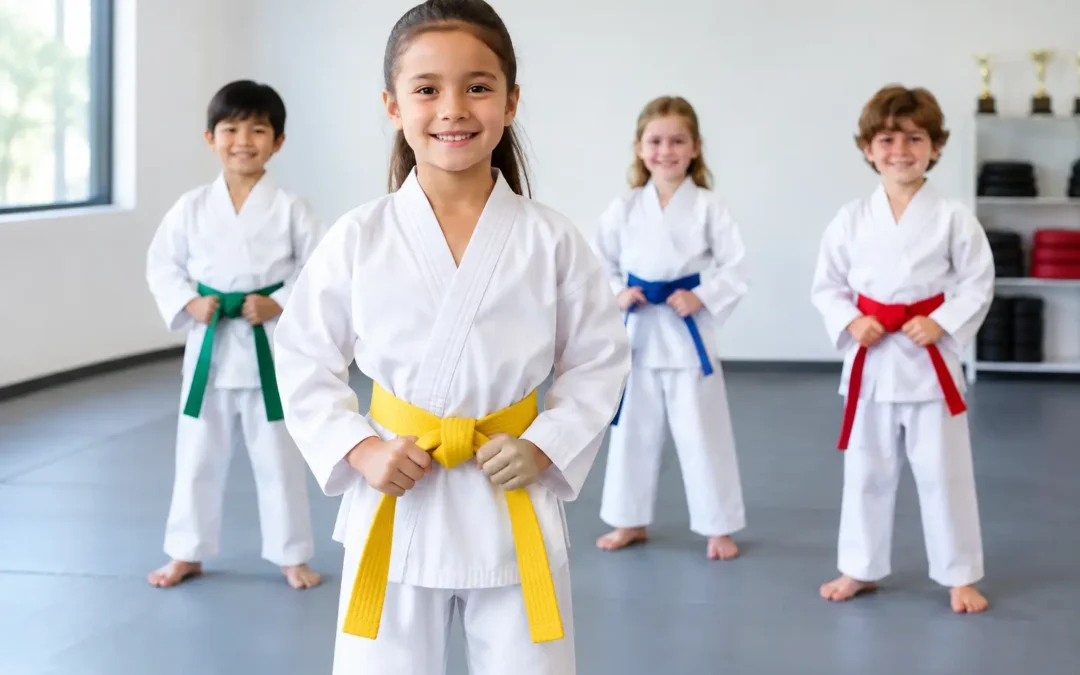
Once a child decides to continue training, a Taekwondo uniform is typically the next step. The uniform is called a dobok, and it usually includes a white jacket-style top, matching pants, and a white belt for beginners. Some schools have specific uniform requirements, including a school patch or approved brand, so it is wise to ask before purchasing one on your own.
A proper dobok is more than a tradition. It is designed for martial arts movement. The fabric is durable enough for repeated kicking, stretching, and washing, while the cut gives students room to practice powerful techniques without feeling restricted.
The uniform also helps create a focused class environment. When students dress alike, the emphasis shifts away from brands, fashion, and comparisons. Children can concentrate on effort, technique, respect, and progress. For many kids, putting on their uniform becomes part of the mental transition into training. It signals that it is time to listen, work hard, and grow.
Parents should expect a dobok to fit a little roomier than everyday clothing. It should allow the child to lift their knees, extend their legs, and raise their arms overhead comfortably. Pants that drag under the feet can create a tripping risk, while sleeves that are excessively long can interfere with hand techniques. If your child is between sizes, ask the instructor for guidance. A little growing room is useful, but oversized gear can make early classes harder.
Safety Gear Comes Later, Not Always on Day One
Beginning students usually do not need to arrive with a full bag of sparring equipment. Early Taekwondo classes often focus on foundational skills such as stance, balance, blocks, controlled kicks, coordination, and class etiquette. As students progress into supervised sparring or contact drills, the academy will explain which protective equipment is required.
Depending on the program and a child’s level, that equipment may include:
- Headgear to protect the head during controlled sparring
- A chest protector for body contact
- Hand and foot protectors to cushion strikes
- Shin and forearm guards for added protection
- A mouthguard for sparring activities
- A protective cup for boys when required by the program
The exact equipment depends on the school’s training approach, tournament participation, and the age of the student. Do not assume that gear used in another martial art is appropriate for Taekwondo. Proper fit matters just as much as having the equipment itself. Loose headgear can shift during movement, and ill-fitting foot protectors can make kicking awkward or unsafe.
At United Martial Arts Katy, families can ask instructors what is needed at each stage of training rather than buying equipment too early. This helps parents make practical choices while ensuring students train with approved gear when the time is right.
What Kids Should Not Wear to Taekwondo
A few simple choices can prevent discomfort and distractions in class. Kids should remove watches, bracelets, necklaces, rings, and large earrings before training. Even small pieces of jewelry can scratch a training partner, catch on clothing, or get damaged during exercise.
Long hair should be secured away from the face with a soft hair tie. A low ponytail, braid, or bun often works well, as long as it does not create discomfort when a child rolls, stretches, or wears headgear. Avoid hard clips or bulky accessories that can press into the head during floor work.
Kids should also leave chewing gum, toys, and phones out of the training area. A Taekwondo class teaches discipline partly through attention. Showing up prepared, listening when instructions are given, and keeping distractions aside are meaningful habits that carry into school, home, and other activities.
Pack for Comfort, Hydration, and Good Hygiene
What kids wear to Taekwondo matters, but what they bring can make class more comfortable, too. A labeled water bottle is a good idea, especially in active classes or warm Texas weather. Students should arrive hydrated, but they should avoid heavy meals immediately before training. A light snack well before class is often more comfortable than a full stomach before kicking drills.
Bring a small bag for the child’s uniform, water, and any required gear. If your child trains after school, packing a clean T-shirt or uniform in advance keeps the transition simple. For families with back-to-back activities, this small bit of preparation can make it easier for a child to arrive calm and ready rather than rushed.
Cleanliness is part of respect in martial arts. Uniforms and workout clothes should be washed regularly, especially after a sweaty class. Feet and hands should be clean, and any cuts or skin concerns should be mentioned to the instructor before training. These habits help protect the entire class community.
Help Your Child Feel Ready for the First Class
The first Taekwondo lesson can be a big moment, particularly for a child who is shy, new to group activities, or uncertain about trying something unfamiliar. What they wear can support confidence, but parents can help even more by setting simple expectations.
Tell your child that beginners are not expected to know the moves. Their job is to listen, try their best, and treat others with respect. They may not kick high right away, remember every Korean term, or feel coordinated during the first lesson. That is normal. Taekwondo is built on steady progress, not instant perfection.
Arriving a few minutes early can help a child settle in, use the restroom, meet the instructor, and see the training space before class begins. If they are wearing athletic clothing for a trial class, remind them that they are dressed appropriately and ready to participate. Confidence often starts with feeling prepared.
The right Taekwondo clothing is simple: flexible athletic wear at the beginning, an approved dobok once training becomes routine, and protective gear when instructors introduce sparring. With those basics handled, your child can focus on the part that matters most – building discipline, confidence, skill, and pride one class at a time.


Recent Comments