

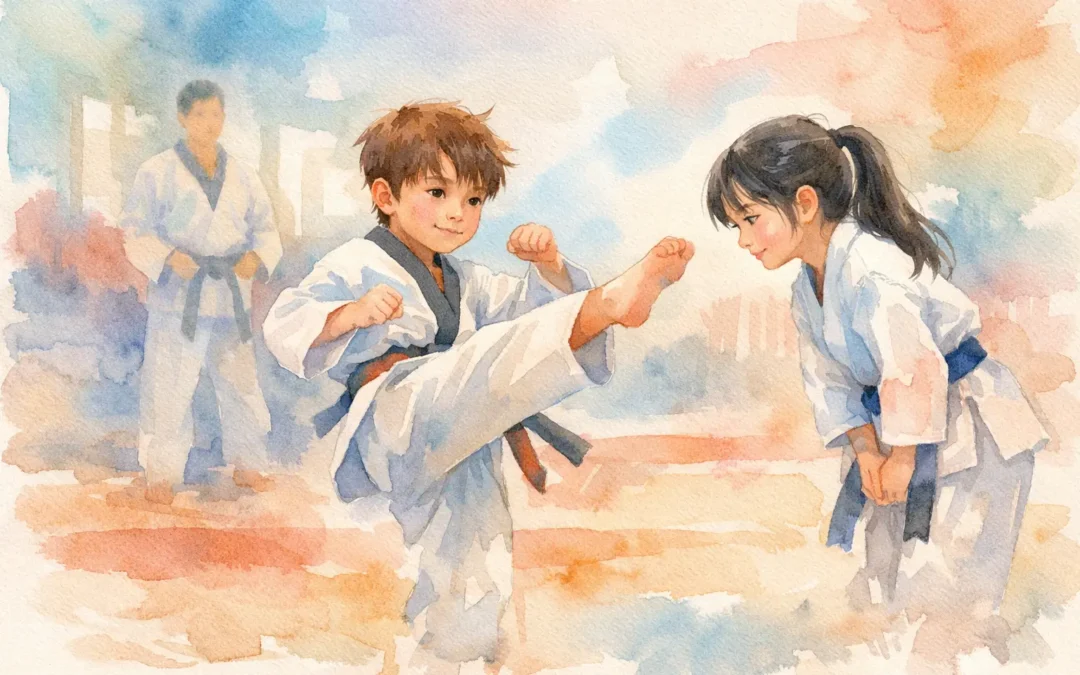
Some children hang back at the edge of the room before they join anything new. They watch first. They stay close to a parent. They speak softly, avoid eye contact, and need time before they feel comfortable. For many families, taekwondo for shy children can be a strong answer – not because it forces a child to become loud, but because it gives them a clear, structured way to grow.
Shyness is not a flaw. Many shy kids are thoughtful, observant, and careful. The challenge comes when hesitation keeps them from participating, speaking up, making friends, or believing in their own abilities. A well-run martial arts program helps by building confidence through action. Instead of telling a child to be more outgoing, it gives them small wins they can feel in their body and see in their progress.
Why taekwondo for shy children can be such a good fit
Taekwondo has a rhythm that helps reserved kids settle in. Classes follow a predictable structure. Students line up, bow in, listen to instruction, practice specific techniques, and work toward clear goals. For a shy child, that consistency matters. It lowers the stress of not knowing what comes next.
There is also less social pressure than in many team sports. A child does not need to shout over a group, compete for the ball, or instantly bond with a team to succeed. They can focus on learning one stance, one kick, one combination at a time. As they improve, confidence tends to rise naturally.
That structure is only part of the picture. The right class also creates a culture of respect. Students are expected to listen, try, and support one another. In that environment, shy children often feel safer taking small social risks. Answering an instructor. Partnering with another student. Demonstrating a drill in front of the group. Those moments may look simple from the outside, but for a timid child, they can be major steps forward.
Confidence grows differently than many parents expect
Parents sometimes hope an activity will quickly turn a quiet child into a bold one. Usually, it does not work that way. Real confidence is built through repetition and earned success.
A shy child may begin by barely speaking in class. Then they start responding with a stronger yes, sir or yes, ma’am. A few weeks later, they hold their stance with more certainty. After that, they volunteer for a partner drill. Eventually, they test for a new belt and realize they can perform under pressure. That is confidence with roots.
Taekwondo is especially effective here because progress is visible. Children can see themselves improving. They remember when they could not balance on one leg, follow directions quickly, or throw a controlled kick. Then they notice they can. Belt advancement helps too, as long as standards are meaningful. Earning rank gives children proof that effort leads to growth.
This matters for shy kids because they often underestimate themselves. They may assume other children are naturally braver, stronger, or more capable. Martial arts training challenges that belief in a concrete way. It shows them that courage is often just practice repeated enough times.
Social growth without forcing a personality change
Not every quiet child wants to be the center of attention, and they do not need to be. One of the strengths of taekwondo is that it can improve social confidence without demanding a personality makeover.
Children learn how to greet instructors, take turns, work with partners, and show respect in shared space. These are practical social skills. They help a child become more comfortable around peers and adults while still allowing them to keep their natural temperament.
That distinction matters. There is a difference between being shy and being weak. There is also a difference between being quiet and lacking confidence. A strong martial arts program respects those differences. The goal is not to make every child outgoing. The goal is to help each child become more capable, more secure, and more willing to engage when it counts.
For some children, the social benefit is gradual. They may not make instant friendships in the first week. That is normal. But repeated class attendance creates familiarity, and familiarity often reduces anxiety. Over time, the shy child who once stayed silent may start smiling at classmates, joining partner work more easily, and feeling that they belong.
The discipline piece helps shy kids too
When parents think about shy children, they often focus only on confidence. Discipline is just as important.
Shy kids sometimes freeze when they are unsure. They may hold back because they are afraid of getting something wrong. Taekwondo teaches them to respond to instruction, attempt the skill, accept correction, and try again. That process builds resilience.
It also helps children manage emotions. A structured class asks them to stand still, listen carefully, control their body, and stay focused. Those habits carry over into school, home, and other activities. A child who gains self-control often feels more secure, and that sense of control can reduce the fear behind shy behavior.
There is another benefit here. Martial arts gives children a stronger physical presence. Better posture, balance, coordination, and body awareness can change how a child carries themselves. Sometimes confidence begins with something as simple as standing taller and moving with purpose.
What parents should look for in a taekwondo program
Not every martial arts school is equally effective for shy children. A loud, chaotic class can overwhelm them. On the other hand, a class that never challenges them will not help them grow.
The best fit is usually a program with clear structure, patient instruction, and high standards delivered in a supportive way. Instructors should know how to encourage beginners without embarrassing them. They should be able to read when a child needs a push and when that push would be too much.
Watch how the class is managed. Are students respectful? Do instructors give corrections calmly and clearly? Is there a balance between discipline and encouragement? Do beginners look lost, or do they look guided? These details matter more than flashy promises.
It also helps when there is a clear progression system. Shy children often do best when they can understand what success looks like. Consistent expectations, skill milestones, and age-appropriate instruction make the experience more secure.
For families in Katy and West Houston, that is one reason many parents look for an academy with experienced leadership and a strong community reputation. A child who feels safe is much more likely to stay engaged long enough to see real change.
What if a child resists at first?
That happens often, and it does not automatically mean taekwondo is the wrong choice.
A shy child may hesitate before class, cling to a parent, or say they do not want to participate. Sometimes they are simply reacting to the newness of the environment. In those cases, consistency helps. One or two classes is not always enough for a reserved child to settle in.
At the same time, parents should pay attention to the kind of resistance they are seeing. Nervousness is normal. Total shutdown over several weeks may mean the class setting, teaching style, or age group is not the right fit. This is where experienced instructors make a difference. They know how to welcome hesitant students without letting them disappear into the background.
Parents can help by keeping expectations steady. Avoid over-talking every class on the drive home. Instead, notice specific effort. You went in today even though you were nervous. You listened well. Your kicks looked sharper. Praise courage and consistency more than performance.
When taekwondo may not be the whole answer
Taekwondo can be powerful, but it is not magic. If a child has severe anxiety, bullying trauma, sensory challenges, or deeper emotional struggles, martial arts may need to be part of a bigger support system rather than the only solution.
That does not reduce its value. In fact, many children benefit from having one place where expectations are clear, progress is measurable, and mentors believe in them. But families should be realistic. Growth can be steady without being instant. Some children become more confident socially within a few months. Others show quieter progress that builds over a longer period.
The key is to look beyond volume. A child does not need to become the loudest one in the room to be thriving. If they are making eye contact more often, following instruction with more assurance, standing taller, and participating with less fear, that is meaningful progress.
A strong start can change more than one area of life
When shy children begin to trust themselves physically, other changes often follow. They may speak up more at school. They may handle setbacks better. They may stop assuming they cannot do hard things before they even try.
That is one of the most valuable parts of martial arts training. It reaches beyond kicks and forms. It teaches children that confidence is earned, discipline creates freedom, and courage can be practiced.
For a shy child, that lesson can last far beyond the mat. Sometimes the first big win is simply walking into class. After that, stronger habits, stronger character, and a stronger voice tend to follow.


Recent Comments