

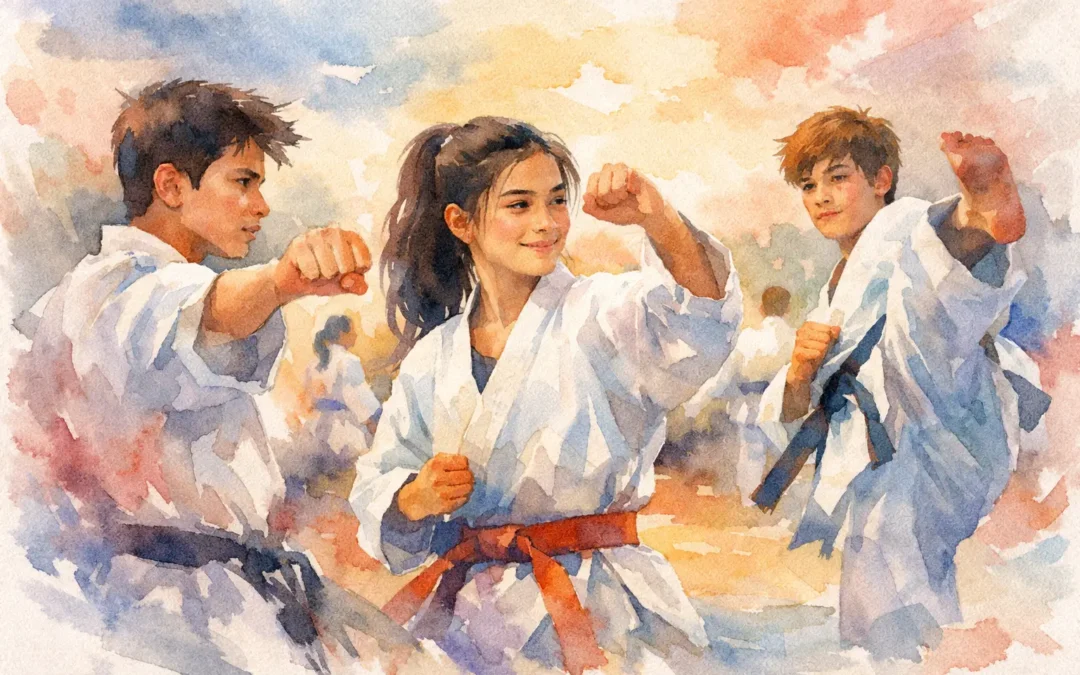
Confidence problems in the teen years rarely look the same from one student to the next. One teen gets quiet and avoids eye contact. Another acts tough, but falls apart after criticism. A third seems capable in school yet freezes in new situations. Martial arts for teen confidence works because it gives teens something more solid than empty encouragement. It gives them proof.
That proof matters. Teens are at an age where they are trying to define themselves while dealing with social pressure, academic demands, changing bodies, and constant comparison. Telling a teenager to “believe in yourself” usually does very little. Helping them earn a new skill, hold their ground under pressure, and see steady progress week after week does much more.
Why martial arts for teen confidence is different
A lot of activities can help a teen stay busy. Fewer help a teen become more composed, more disciplined, and more sure of who they are. Martial arts stands apart because it combines physical challenge with mental structure.
In a strong program, teens are not just burning energy. They are learning how to listen, respond, adapt, and stay accountable. They bow in, focus, drill techniques, work with partners, and improve through repetition. Over time, that process starts to shape how they carry themselves outside class too.
Confidence built this way is not based on popularity, appearance, or natural talent. It comes from effort. A teen who has practiced takedowns, forms, footwork, or defensive movement hundreds of times begins to trust their ability to learn hard things. That trust is a major shift.
The kind of confidence teens actually need
Real confidence is not loud. It is not arrogance, and it is not pretending to fear nothing. For teenagers, healthy confidence usually looks like a few important traits working together.
It looks like speaking clearly instead of shrinking back. It looks like trying again after a mistake. It looks like staying calm when someone tests boundaries. It looks like accepting correction without feeling defeated. Those are life skills, not just sports skills.
Martial arts training develops those traits in a practical setting. Teens get immediate feedback. If their stance is off, they adjust it. If their timing is late, they work on it. If they lose position in sparring or grappling, they learn why and improve. That cycle teaches a powerful lesson – struggling is part of growth, not proof of failure.
For many teenagers, that mindset change is where confidence begins.
How training builds confidence step by step
The biggest reason martial arts works for confidence is that progress is visible. Teens can feel themselves getting stronger, more coordinated, and more capable. They can see techniques improve. They can measure growth through belt advancement, sharper focus, and better control.
Small wins add up fast. A teen who was nervous on the first day may be leading drills months later. A student who once avoided partner work may become dependable and focused under pressure. That change does not happen overnight, but it happens through a structured process that makes growth hard to ignore.
Mentorship also plays a major role. Teens respond well when coaches set high standards and provide clear guidance. In martial arts, respect and accountability are built into the class environment. Students know what is expected, and they learn that discipline is not punishment. It is a path to improvement.
That matters especially for teens who feel overlooked, discouraged, or stuck. The right instructor sees potential before a student fully sees it in themselves.
Confidence and self-defense are connected
One reason parents look into martial arts is safety, and that is a valid concern. Confidence and self-defense often support each other. A teen who knows how to stay aware, set boundaries, and respond under pressure tends to carry themselves differently.
That difference can be significant. Predatory behavior often targets uncertainty. Teens who project awareness and composure are less likely to appear vulnerable. They are also better prepared to make smart decisions in uncomfortable situations.
This does not mean every teen needs intense contact training, and it does not mean every program should look the same. Some students thrive in striking arts like Tae Kwon Do. Others gain confidence through grappling arts like Brazilian Jiu-Jitsu or wrestling, where they learn control, leverage, and resilience in close-range situations. It depends on temperament, goals, and comfort level.
The important point is that confidence grows when teens feel less helpless. Learning practical self-defense skills can reduce fear because it replaces uncertainty with preparation.
What shy teens and struggling teens often gain
Parents sometimes assume martial arts is only for naturally athletic or highly competitive teens. In reality, it can be especially valuable for students who are reserved, anxious, or still finding their footing.
A shy teen may benefit from the consistency of class structure. There is a routine, a purpose, and a clear next step. They do not have to dominate the room to succeed. They just have to show up, listen, and keep working.
Teens who struggle with motivation often respond well to the goal-based nature of training. Belts, skill milestones, and coach feedback provide a framework that many other activities lack. Instead of vague pressure to “do better,” they get specific guidance and the satisfaction of earned progress.
Even teens with a strong personality benefit. Martial arts can channel intensity into discipline. It teaches control, respect, and emotional regulation without asking students to lose their edge. It helps them sharpen it.
The social side matters more than people think
Teen confidence is shaped by environment. If a teen trains in a place where they feel judged, ignored, or overwhelmed, growth will be limited. If they train in a community that values effort, respect, and teamwork, confidence has room to develop.
That is why culture matters as much as curriculum. A well-run academy creates a space where teens are challenged, but also supported. They learn to work with partners, take direction, and encourage others. They see students ahead of them and realize what is possible. They help newer students and begin to recognize their own progress.
This kind of community can be a turning point, especially during years when peer pressure hits hard. Teens need strong influences. They need mentors who expect more from them and classmates who are focused on growth, not tearing each other down.
At a school like United Martial Arts Katy, that balance of structure and encouragement is part of what makes training meaningful for families. Parents are not just looking for activity. They are looking for an environment that helps teens mature.
What parents should look for in a program
Not every martial arts school will build confidence in the same way. Some focus heavily on competition. Some are more traditional. Some are better for beginners than others. None of those approaches are automatically wrong, but the right fit matters.
Parents should look for certified instruction, clear class structure, and a culture of respect. The program should challenge teens without humiliating them. It should be beginner-friendly without being soft on standards. It should emphasize safety, skill progression, and character development alongside physical training.
It also helps to look at how instructors communicate. Strong coaches know how to correct students firmly while still building them up. They do not rely on hype. They teach with purpose.
If a teen is hesitant, a trial class can tell you a lot. Watch how the coaches interact. Notice whether students are engaged. Pay attention to whether the environment feels disciplined, welcoming, and focused.
The confidence that lasts
The best outcome of martial arts is not just that a teen feels braver in class. It is that they begin carrying themselves differently in everyday life. They speak with more certainty. They recover faster from setbacks. They stop needing constant reassurance. They learn that respect is earned, discipline matters, and growth takes work.
That kind of confidence is durable because it is built through action. It does not disappear after one bad day, one awkward moment, or one disappointment. It has roots.
Every teen develops at a different pace. Some change quickly. Others need time before the shift becomes obvious. But when training is consistent, well-structured, and guided by strong mentorship, martial arts can become one of the most effective ways to help a teenager grow stronger from the inside out.
A confident teen is not created by pressure or praise alone. More often, confidence is built one class, one challenge, and one earned victory at a time.


Recent Comments