

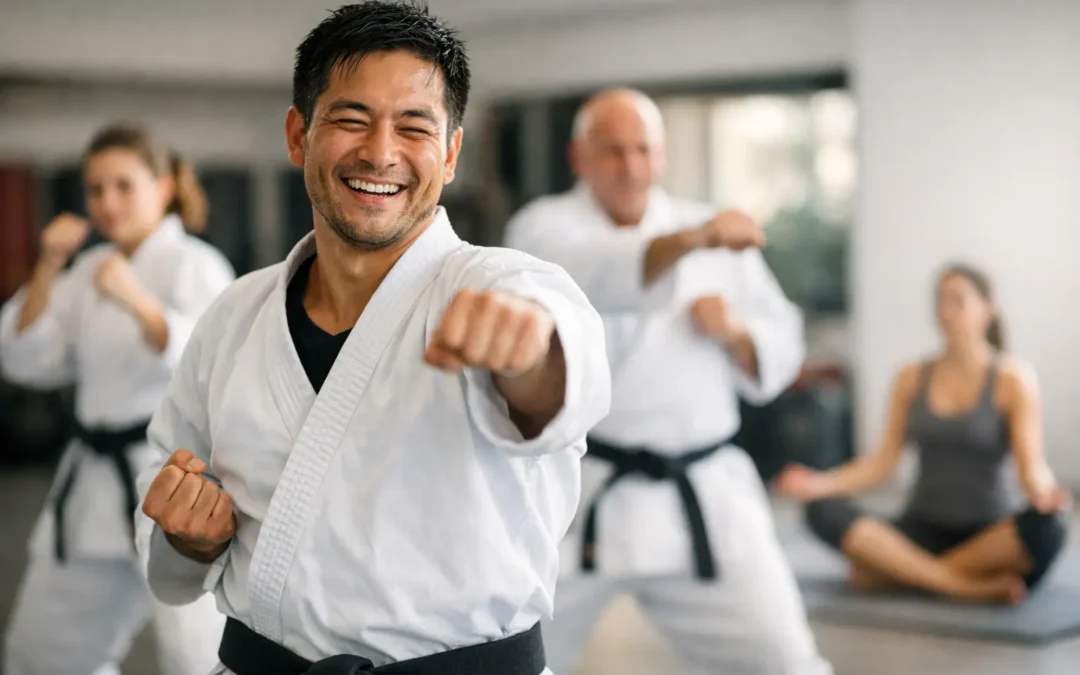
A stressful day often follows people through the front door. It shows up as a short temper with the kids, a mind that will not turn off, tight shoulders, or another evening spent scrolling instead of recovering. The martial arts stress relief benefits are not about pretending pressure does not exist. They come from giving your body and mind a disciplined way to meet that pressure, release it, and move forward with more control.
For adults, teens, and children, martial arts offers something a standard workout can miss: focused instruction, measurable progress, and a supportive community that expects your best while meeting you where you are. Every class has a purpose. You warm up, learn, practice, improve, and leave with a clear sense that you used your time well.
Why Stress Needs More Than a Workout
Stress is not only a thought problem. It affects sleep, breathing, posture, energy, patience, and decision-making. When the body stays on alert for too long, even small demands can feel bigger than they are. Exercise can help, but the best activity is often the one you will attend consistently and find meaningful enough to keep doing.
Martial arts combines physical effort with mental direction. In Brazilian Jiu-Jitsu, students must stay calm enough to recognize positions and make smart choices under pressure. In Tae Kwon Do, technique, balance, timing, and controlled power require full attention. Wrestling develops grit, body awareness, and the ability to reset after a difficult exchange.
That concentration gives everyday worries less room to take over. You are not replaying an email or tomorrow’s schedule while you are learning footwork, escaping a hold, or practicing a combination correctly. Your attention has a job.
Martial Arts Stress Relief Benefits Begin With Focus
One of the strongest benefits of training is the transition from mental noise to present-moment action. A quality class asks students to listen, watch, move, and adjust. That process is demanding enough to interrupt rumination without requiring students to sit still and force their minds to be quiet.
For many adults, this is a welcome change from unstructured gym time. There is no need to decide what machine to use or whether a workout was productive. An instructor guides the session, teammates create accountability, and each drill gives you an immediate objective.
Children and teens benefit from that structure too. A student who carries school pressure, social stress, or excess energy into class has a constructive outlet. They learn that strong emotions do not have to lead to impulsive choices. They can breathe, follow directions, practice again, and improve.
Controlled Challenge Builds Emotional Control
Martial arts training is challenging by design, but it should be controlled and age-appropriate. Missing a technique, losing position during a drill, or struggling through conditioning can be frustrating. With certified instruction and respectful partners, those moments become practice in composure.
Students learn to respond instead of react. They discover that difficulty is not a signal to quit or lash out. It is information: adjust your stance, protect your balance, ask a question, and try again. Over time, that habit can carry into work conversations, school setbacks, family responsibilities, and personal goals.
This is not a promise that martial arts will erase anxiety or solve every source of stress. Serious or persistent mental health concerns deserve support from qualified healthcare professionals. Training can be a powerful part of a healthy routine, but it is not a replacement for needed care.
Physical Release Without Mindless Burnout
Stress often creates physical tension. Martial arts gives that tension a useful direction through pads, drills, movement, grappling, conditioning, and mobility work. A challenging class can raise the heart rate, strengthen the body, and leave students feeling physically spent in a satisfying way.
The difference is purpose. Students are not simply burning calories. They are developing coordination, learning how to move with control, improving cardiovascular endurance, and building practical self-defense skills. Progress feels earned because it is connected to real techniques and clear standards.
There is a trade-off to consider. A hard session too close to bedtime may leave some people energized rather than ready to sleep, especially when they are new to training. Others find that evening classes help them release the workday and rest better afterward. It depends on the person, training intensity, recovery habits, and schedule. The right program helps students pace themselves rather than treating exhaustion as the only measure of success.
Confidence Reduces the Weight of Everyday Pressure
Much of stress comes from feeling unprepared. Martial arts cannot control traffic, deadlines, or difficult people, but it can change how capable a person feels when facing challenge. Learning a skill that once felt unfamiliar creates proof: you can begin as a beginner, stay consistent, and get better.
That proof matters. A child may stand taller at school after learning to speak clearly and follow through. A teen may gain confidence from seeing that discipline produces results. An adult may feel more secure knowing they are improving their awareness, fitness, and ability to protect themselves.
Confidence is not loudness or aggression. In a well-run academy, it is calm. It looks like maintaining eye contact, setting boundaries respectfully, accepting correction, and knowing you can handle discomfort without falling apart. Those are stress-management skills as much as martial arts skills.
Community Makes Relief More Sustainable
Stress can make people withdraw. They skip workouts, cancel plans, and carry everything alone. Martial arts creates a healthy reason to show up. Training partners notice your progress. Instructors know your goals. Families can share an activity that reinforces discipline, respect, and effort.
That sense of belonging is especially valuable for newcomers who do not identify as athletes. Beginners do not need prior experience, perfect fitness, or a certain body type to start. They need a safe place to learn, a willingness to practice, and instruction that respects the pace of the student.
At United Martial Arts Katy, students can choose a path that fits their goals, whether that means the technical problem-solving of Brazilian Jiu-Jitsu, the striking and discipline of Tae Kwon Do, wrestling, private instruction, or fitness-focused classes. Variety helps families and adults find training they genuinely look forward to, which is essential for consistency.
How to Get the Most From Training
The martial arts stress relief benefits grow through regular practice, not one perfect class. Start with a realistic schedule. For many beginners, two classes a week creates enough repetition to build familiarity while leaving room for work, school, family, and recovery.
Arrive a few minutes early when possible. Give yourself a small buffer between daily responsibilities and training so you can settle in, hydrate, and shift your attention. During class, focus on learning rather than proving yourself. A student who asks questions and practices carefully will often make more lasting progress than one who tries to win every drill.
After class, notice more than sore muscles. Pay attention to your mood, sleep, patience, and ability to concentrate the next day. Those changes may be subtle at first. Keep a simple routine, fuel your body well, and tell your instructor about injuries, limitations, or goals that affect your training.
Parents can reinforce the value at home by praising effort, respect, and consistency rather than only belts or trophies. When children understand that training is a place to practice self-control and resilience, the lessons become more useful beyond the mat.
The next time stress starts shrinking your patience, energy, or confidence, choose an activity that asks more of you than distraction. Step onto the mat, focus on the next technique, and let disciplined practice remind you what you are capable of building.


Recent Comments