

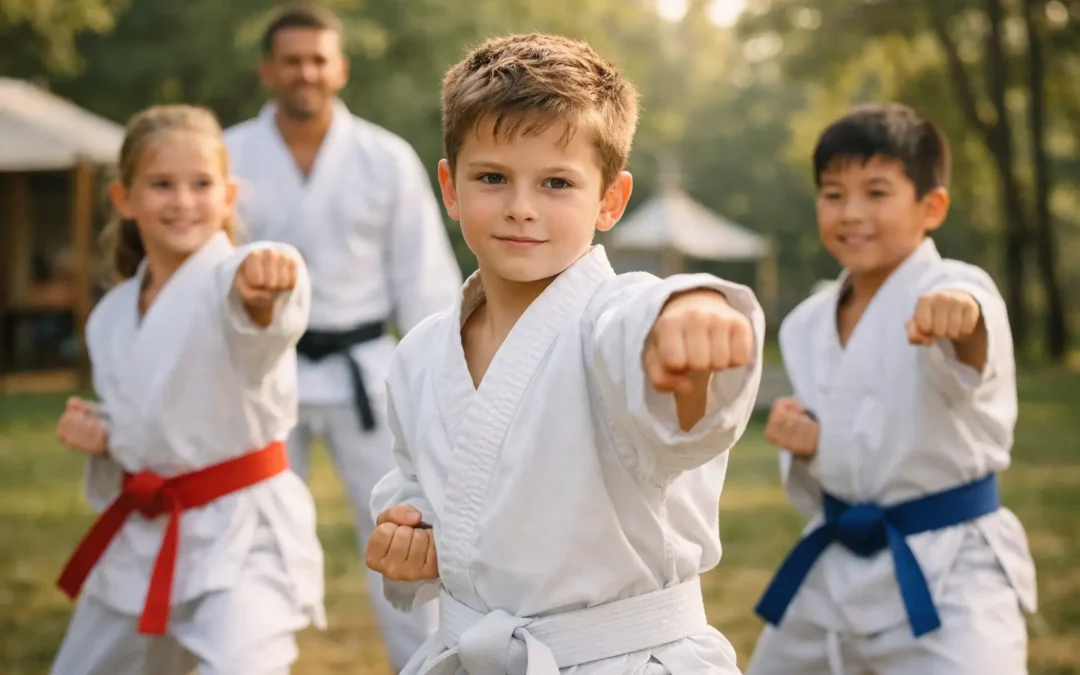
A school break can quickly lose its rhythm. Without a clear routine, children may spend long stretches on screens, miss regular movement, and return to school feeling less focused than when the break began. Martial arts camps offer a different kind of week: one built around active learning, positive coaching, new friendships, and goals children can feel proud to reach.
For parents, the value is not simply finding a safe place for a child to spend the day. The right camp gives kids a structured environment where they practice listening, work through challenges, move with purpose, and learn that effort produces progress. Those are lessons that carry into the classroom, at home, and on the mat.
What Martial Arts Camps Should Deliver
A quality martial arts camp is more than a shortened version of a regular class. It should be designed for the pace and energy of children during a school break. Camp days may include martial arts instruction, fitness drills, age-appropriate self-defense concepts, team activities, games, and time to reset between focused sessions.
The martial arts component gives the day its purpose. Children learn how to stand with balance, follow instructions under pressure, control their bodies, and treat training partners with respect. Whether the camp includes Tae Kwon Do, Brazilian Jiu-Jitsu, wrestling fundamentals, or a blend of disciplines, instruction should be organized around safe, achievable skills.
That structure matters because children do not build confidence from constant praise alone. They build it by doing something difficult, receiving clear coaching, and realizing they can improve. A child who struggled with a stance on Monday and performs it confidently by Friday has earned a real sense of accomplishment.
Confidence Is Built Through Repetition
Many parents look for martial arts camps because their child needs more confidence. That goal is worthwhile, but confidence is often misunderstood. It is not about making a child louder or more aggressive. Healthy confidence is the ability to enter a new situation, stay composed, and trust that you can respond with skill and effort.
Camp gives children repeated chances to practice that mindset. They may be asked to introduce themselves to a partner, attempt a new drill, speak up during an activity, or keep trying after a mistake. Certified instructors can turn each moment into a lesson in resilience rather than embarrassment.
For shy children, this may mean gradually becoming comfortable participating in a group. For highly energetic children, it may mean learning how to direct their energy with control. For both, the goal is the same: stronger self-belief supported by discipline and respect.
Physical Activity With a Purpose
Children need movement, especially during weeks when normal school routines are paused. Martial arts training develops coordination, mobility, balance, body awareness, and cardiovascular endurance without feeling like a repetitive workout. Kids are too busy practicing, playing, and learning to view every activity as exercise.
A well-run camp also teaches children that physical training has standards. They learn to warm up properly, give classmates personal space, use controlled techniques, and pay attention when an instructor explains a safety rule. These habits support healthy movement long after camp is over.
There is a trade-off worth considering. A camp that is all games may keep children entertained, but it may not provide meaningful skill development. A camp that is overly technical or rigid can lose younger students who need variety and fun. The best programs balance focused instruction with high-energy activities so children stay engaged while still making progress.
How to Choose a Martial Arts Camp
Not all camps provide the same level of instruction, supervision, or value. Before enrolling, parents should look beyond a colorful schedule and ask how the program is actually run.
Start with the instructors. Children need coaches who understand both martial arts and child development. Experienced instructors know how to set clear expectations without creating an intimidating atmosphere. They can correct a student firmly and respectfully, recognize effort, and adjust instruction for different ages and skill levels.
Safety should also be visible in the program design. Ask how students are grouped, how physical contact is supervised, and how staff introduce techniques involving partner work. Martial arts can be an excellent activity for beginners when instructors teach control from the first drill and maintain close supervision throughout the day.
Consider the camp’s daily rhythm as well. Younger children generally benefit from short training blocks, active games, hydration breaks, and transitions that keep them from becoming overwhelmed. Older children and teens can often handle more technical instruction, conditioning, and leadership opportunities. One mixed-age activity is not automatically a problem, but instruction should not treat a six-year-old and a twelve-year-old as though they learn the same way.
Finally, look for a camp with a clear purpose. Is it designed to introduce martial arts, deepen existing skills, support fitness, build social confidence, or all of the above? A strong program can accomplish several goals, but it should communicate them clearly rather than promising vague transformation.
A Good Camp Experience Starts Before Day One
Children often arrive at camp with a mix of excitement and nerves, especially if they are new to martial arts. Parents can make the first day easier by explaining what to expect: instructors will give directions, students will practice with others, and nobody is expected to know everything right away.
Comfortable athletic clothing, a water bottle, and a willingness to listen are usually more important than expensive gear. If a uniform is provided or required, the academy should explain that ahead of time. Parents should also share any medical concerns, allergies, sensory needs, or relevant behavioral information so instructors can support the child appropriately.
It helps to set one simple goal with your child before camp begins. It could be introducing themselves to one new person, practicing respectful listening, trying a technique even if it feels unfamiliar, or earning a compliment for effort. Specific goals give children something meaningful to work toward beyond simply making it through the day.
Why the Right Environment Matters
Martial arts are built on standards: discipline, honor, respect, and accountability. At a camp, those values should feel active rather than ceremonial. Students show respect by listening the first time. They demonstrate discipline by returning to their stance after a correction. They show honor by helping a partner learn instead of laughing when someone makes a mistake.
This environment can be especially valuable for children who need more consistency outside of school. The expectations are clear, the rules have a purpose, and positive behavior is recognized. Children learn that being part of a group means contributing to it.
At United Martial Arts Katy, that family-centered approach is central to training. Children are challenged to grow in skill and confidence while being guided by instructors who take safety, progress, and character seriously. The goal is never to turn every child into the same athlete. It is to help each student develop stronger habits and a stronger belief in what they can achieve.
Camp Can Be a Beginning, Not Just a Break Activity
For some families, a martial arts camp is a convenient school-break solution. For others, it becomes a child’s first experience with a discipline that gives them direction for years. Both outcomes are valuable. A single week can introduce a child to new friends, better movement habits, and the pride of working toward a goal.
If your child enjoys the structure of camp, regular training can provide the consistency that makes those early gains stick. Progress in martial arts comes through steady practice, patient coaching, and the willingness to return after a hard day. The confidence a child carries home from camp is most powerful when they discover they can keep building it.


Recent Comments