

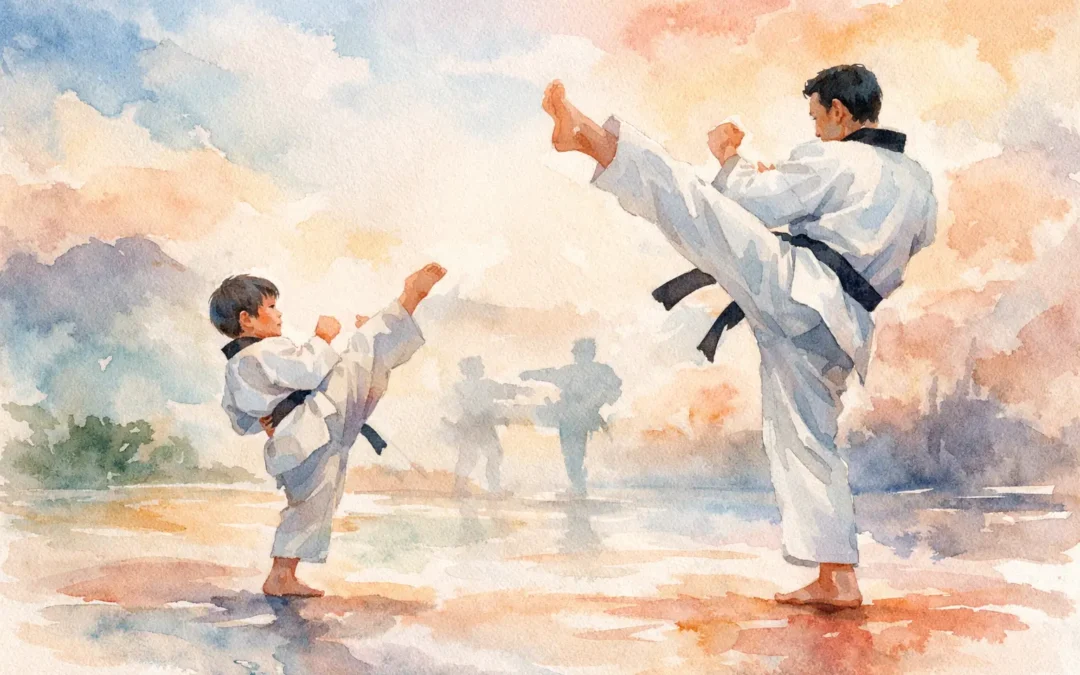
One child is bouncing off the walls at home and needs structure. Another is quiet, cautious, and could use more confidence. A parent sees both and asks the same question: what is the best age to start taekwondo? The honest answer is that there is no single perfect age. There is, however, a right starting point based on maturity, attention span, physical readiness, and what the student needs most.
Taekwondo is one of the few activities that can grow with a student for years. A young child may begin by learning how to listen, follow directions, and move with control. A teenager may use training to build discipline and resilience. An adult may start for fitness, self-defense, or stress relief. The value of starting is real at every stage, but the experience looks different depending on age.
Best age to start taekwondo for kids
For most children, ages 4 to 6 are a strong starting window. At this age, many kids are ready for a structured class environment, but still young enough to absorb habits that can shape their confidence and behavior early. They are learning how to focus, how to take correction, and how to work steadily toward a goal. Good taekwondo instruction channels that energy in a positive direction.
That said, not every 4-year-old is ready just because they have reached the age. Some children thrive in a beginner class right away. Others need a little more time to handle listening, waiting their turn, and staying engaged for the length of class. The best programs understand that age and readiness are not always the same thing.
For younger children, success is less about advanced technique and more about foundation. They should be learning balance, coordination, respect, and basic movement patterns in a way that keeps them motivated. When the teaching is age-appropriate, children can build discipline without feeling overwhelmed.
Starting at ages 4 to 6
This is often the sweet spot for early beginners. Kids in this range are usually eager to move and learn, and martial arts gives them a clear structure for both. They can begin developing body control, confidence, and class etiquette while still having fun.
The trade-off is that progress may look different than many parents expect. A 5-year-old is not going to train like a 10-year-old. Improvement may show up as better focus at school, more confidence speaking up, or fewer emotional outbursts when frustrated. Those changes matter just as much as kicks and forms.
Starting at ages 7 to 10
This is another excellent time to begin. Children in this group often have better attention spans, stronger coordination, and more patience for repetition. They can usually handle more detailed instruction and begin understanding why technique matters, not just what to do.
Many students who start here progress quickly because they are old enough to connect effort with results. They can set goals, work toward new belts, and take pride in measurable improvement. For parents, this age often brings a good balance of fun and serious skill development.
Is there a best age to start taekwondo for teens?
Absolutely. If a student starts in the teen years, they are not late. In many cases, teens are in a great position to benefit from martial arts because they can handle physical challenge, absorb detailed coaching, and understand the connection between discipline and achievement.
The teenage years can also be tough. Confidence can dip, stress increases, and many teens spend too much time sitting, scrolling, or moving between school pressures and social pressures. Taekwondo gives them a productive outlet. It offers structure, accountability, and a way to build real confidence through earned progress.
A teen beginner may feel self-conscious at first, especially if they believe everyone else started younger. A well-run academy helps remove that pressure. Strong instruction meets students where they are, with a beginner path that is demanding but supportive. Once teens settle in, many find that martial arts gives them something they have been missing: focus, challenge, and a sense of control.
Adults can start later than they think
A lot of adults assume they missed their chance. They think martial arts is only for kids who started early or athletes who already move well. That simply is not true. Adults begin taekwondo for all kinds of reasons, and many become highly capable students.
For adults, the best age to start taekwondo is often now. Waiting for the perfect time usually means waiting too long. If the goal is better fitness, practical self-defense, stress management, or learning something that demands focus, starting sooner has obvious benefits.
Adults do need to be realistic. Flexibility may take time. Conditioning may need to build gradually. Old injuries may require smart modifications. But adults usually bring strengths that younger students do not have. They understand commitment. They can follow instruction closely. They often appreciate the process more because they chose it for a reason.
What adults gain from starting
Adult students often notice improvements that go beyond the mat. They feel more alert, more confident, and more capable under pressure. Training can sharpen discipline in everyday life, from work routines to personal health habits. It is also one of the few forms of exercise that stays mentally engaging because there is always a new skill to improve.
For parents, there is another benefit. When children see a parent commit to training, they see what consistency looks like. Martial arts becomes more than an activity. It becomes part of a family culture built around effort, respect, and growth.
What matters more than age
If families focus only on a number, they can miss the bigger picture. A student is ready when a few key pieces are in place.
First, they should be able to participate safely in a group setting. That means following basic directions, respecting boundaries, and managing emotions well enough to stay engaged. Second, they need an environment that matches their stage of development. A young child needs different coaching than a teen or adult. Third, the instruction has to be structured. Good martial arts training is not chaos with kicking. It is deliberate, progressive, and built around skill, safety, and character.
Motivation matters too. Some students start because they are excited. Others start because a parent wants more focus and discipline. Both can work, but the program needs to help the student buy in. Real progress happens when training becomes something they value, not something they simply endure.
How to tell if your child is ready
Parents usually have a strong instinct here. If your child can separate from you without major distress, follow simple instructions, and stay engaged for short periods, they may be ready for a beginner program. If they struggle heavily with transitions, boundaries, or group participation, a little more time may help.
It is also worth thinking about goals. If your child needs confidence, a supportive martial arts class can help. If they need discipline, consistency and structure matter more than intensity. If they have plenty of energy and need a productive outlet, taekwondo can be a strong fit because it combines movement with self-control.
The right academy makes a big difference. Families in Katy often look for a school that balances high standards with a welcoming atmosphere. That matters because beginners, especially younger ones, do best when expectations are clear and encouragement is consistent. At United Martial Arts Katy, that balance is a big part of why families stay involved over time.
Why starting earlier is not always better
There is a common belief that the earlier a child starts, the better the result. Sometimes that is true. Early training can build strong habits and comfort in the martial arts environment. But starting too early in a program that does not match the child can backfire.
If a child is pushed into training before they are ready, they may become frustrated or lose interest. Parents may then assume martial arts is not for them, when the real issue was timing or class structure. A strong beginning is better than an early beginning.
The same principle applies to adults. Starting at 35 with clear goals and a willingness to learn can be far more effective than starting at 15 without commitment. Progress is not just about age. It is about consistency, quality coaching, and the student’s mindset.
So, when should you begin?
If a child is around 4 to 6 and can handle a structured class, that is often a great time to start. If they are older, they are not behind. Ages 7 to 10 can be ideal for skill development. Teenagers can gain tremendous value from the confidence and discipline martial arts builds. Adults can begin at nearly any age if they train intelligently and stay consistent.
The best age to start taekwondo is the age when the student is ready to learn, supported by the right instruction, and willing to keep showing up. That is where confidence starts to grow. That is where discipline takes shape. And that is where martial arts begins doing what it does best – building stronger people from the inside out.
If you are considering classes for yourself or your child, do not worry so much about whether the timing is perfect. Look for a place that teaches with structure, patience, and high standards, then take the first step.


Recent Comments