

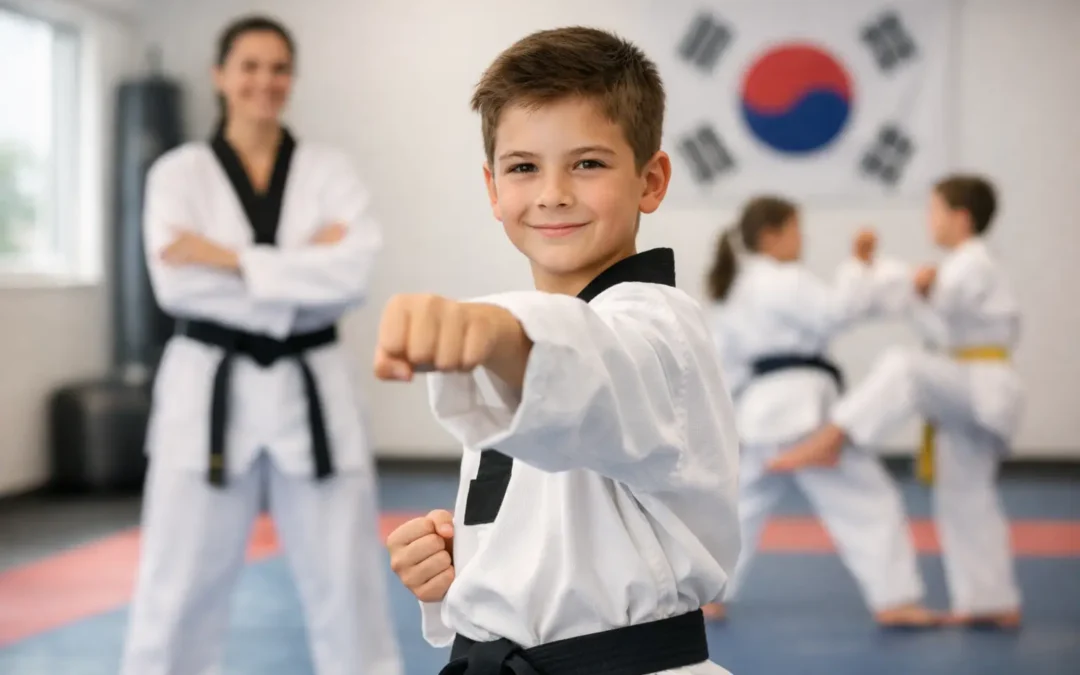
A child who hesitates to speak up in class, a teen who needs a positive challenge, and an adult tired of the same gym routine may have different goals. Taekwondo classes give each of them a clear path forward: learn a skill, practice it with purpose, and see progress through consistent effort.
At the right academy, Tae Kwon Do is more than kicking and punching. It is structured training that teaches students how to move with control, respond under pressure, respect others, and take pride in earned progress. Those lessons carry into school, work, home, and everyday life.
What Taekwondo Classes Teach Beyond Technique
Tae Kwon Do is known for powerful kicks, quick footwork, forms, and disciplined sparring. Those skills matter, especially for students who want practical self-defense knowledge and better athletic coordination. But the deeper value comes from how training is taught.
Students are expected to listen, follow instructions, practice details, and stay engaged even when a new movement feels difficult. A beginner may need time to balance during a kick or remember a sequence of techniques. Instead of avoiding the challenge, they learn to break it into manageable steps. That habit builds resilience.
Rank progression also gives students a meaningful way to measure improvement. Belts are not simply rewards for showing up. They represent time, effort, technical development, and the ability to demonstrate discipline. For children and teens especially, that visible progress can be a powerful reminder that confidence is built through action.
Respect is equally central. Students learn to respect instructors, training partners, the rules of the mat, and their own responsibilities. A strong program creates an environment where beginners can ask questions, advanced students can lead by example, and everyone is held to a clear standard.
Why Kids Benefit From Taekwondo Training
Parents often begin looking at martial arts because their child needs more confidence, better focus, or a healthy outlet for energy. Tae Kwon Do can support all three, but its value depends on consistent instruction and realistic expectations.
A good kids program does not promise to change behavior overnight. It gives children repeated opportunities to practice self-control. They learn when to move and when to stop, how to take correction without shutting down, and how to keep trying after a mistake. Over time, those small moments can make a noticeable difference in how a child handles school, friendships, and responsibilities at home.
Physical development matters, too. Kicking drills, stances, coordination work, and age-appropriate conditioning help children develop body awareness. For a child who is not drawn to traditional team sports, martial arts can offer a more individual path to becoming active. They still train alongside peers, but success is not limited to being the fastest or scoring the most points.
The social setting is another advantage. Students work with classmates who are learning at different speeds and levels. They practice taking turns, encouraging one another, and handling both success and frustration with maturity. In a family-friendly academy, that shared effort becomes part of a community children look forward to joining each week.
A Positive Challenge for Teens
Teenagers need training that feels real. They are often looking for greater independence, stronger fitness, and a place where effort is recognized. Tae Kwon Do meets them with clear expectations and measurable goals.
Training can improve speed, flexibility, balance, endurance, and coordination. More importantly, it teaches teens to stay composed when they are tired or under pressure. Controlled sparring, when introduced at the appropriate level, helps students apply techniques while respecting safety rules and their training partners.
For some teens, martial arts becomes a productive counterbalance to screens, academic pressure, and social stress. They enter class with a busy mind and leave knowing they worked toward something concrete. The focus required to perform a form or refine a combination creates a break from distraction without becoming another passive activity.
Not every teen wants competition, and that is okay. Some thrive in tournaments, while others prefer training for fitness, self-defense, and personal growth. A quality program gives students room to pursue their goals without treating one path as more valuable than another.
Taekwondo Classes for Adults Are Not Just a Workout
Adults often arrive with practical questions: Will I be able to keep up? Do I need prior experience? Is this useful for self-defense? The answer begins with the academy’s approach.
Beginner-friendly Tae Kwon Do should meet adults where they are. You do not need to be flexible before your first class, and you do not need to know how to kick. Certified instructors should teach proper mechanics, help students scale intensity when needed, and build skills progressively. A challenging class should leave you motivated, not discouraged or injured.
The fitness benefits are substantial. Training engages the legs, core, hips, shoulders, and cardiovascular system while demanding concentration. Unlike a routine built around repeating the same machine exercises, martial arts asks your body and mind to work together. You are learning timing, distance, posture, and coordination alongside conditioning.
Self-defense is another reason adults choose Tae Kwon Do. Effective training should emphasize awareness, confidence, distance management, controlled technique, and sound decision-making. The goal is not to encourage confrontation. It is to help students carry themselves with more awareness and have practical skills if they need to protect themselves.
What to Look for in a Tae Kwon Do Academy
The quality of instruction shapes the experience more than the color of the mats or the size of the building. Families and adults should look for an academy with qualified instructors, a structured curriculum, and clear standards for safety and student conduct.
Ask how classes are organized by age and experience. Young children need a different pace and teaching style than teens or adults. A well-run program recognizes those differences rather than placing everyone in one oversized class. It should also explain how students progress, when sparring is appropriate, and how instructors maintain a supportive training environment.
Pay attention to how instructors correct students. Strong coaching is direct, encouraging, and specific. Students should know what they did well, what needs improvement, and what to work on next. Empty praise may feel good for a moment, but thoughtful feedback creates lasting growth.
The academy culture matters just as much. Look for a place where students are challenged without being intimidated. Martial arts should build humility and confidence at the same time. At United Martial Arts Katy, that balance is rooted in disciplined instruction, respect, and a commitment to helping students grow on and off the mat.
Getting More From Your First Classes
Your first few classes are about learning the rhythm of training, not performing perfectly. Wear comfortable athletic clothing, arrive ready to listen, and give yourself permission to be new. Every experienced martial artist started by learning a stance, a basic block, or a first kick.
Consistency will matter more than intensity at the beginning. Two focused classes per week can create better long-term progress than training hard once and disappearing for a month. Students who improve steadily tend to set simple goals: attend regularly, practice one detail at a time, and stay patient with the process.
Parents can support young students by asking about effort instead of only asking whether they earned a new belt. Questions such as, “What was challenging today?” or “What did you improve?” reinforce the lessons that make martial arts meaningful. Adults can do the same for themselves by noticing better focus, stronger movement, or greater confidence outside class.
The best time to begin is not when you feel completely ready. It is when you are ready to take one disciplined step, enter the training space, and give yourself the chance to grow.


Recent Comments