

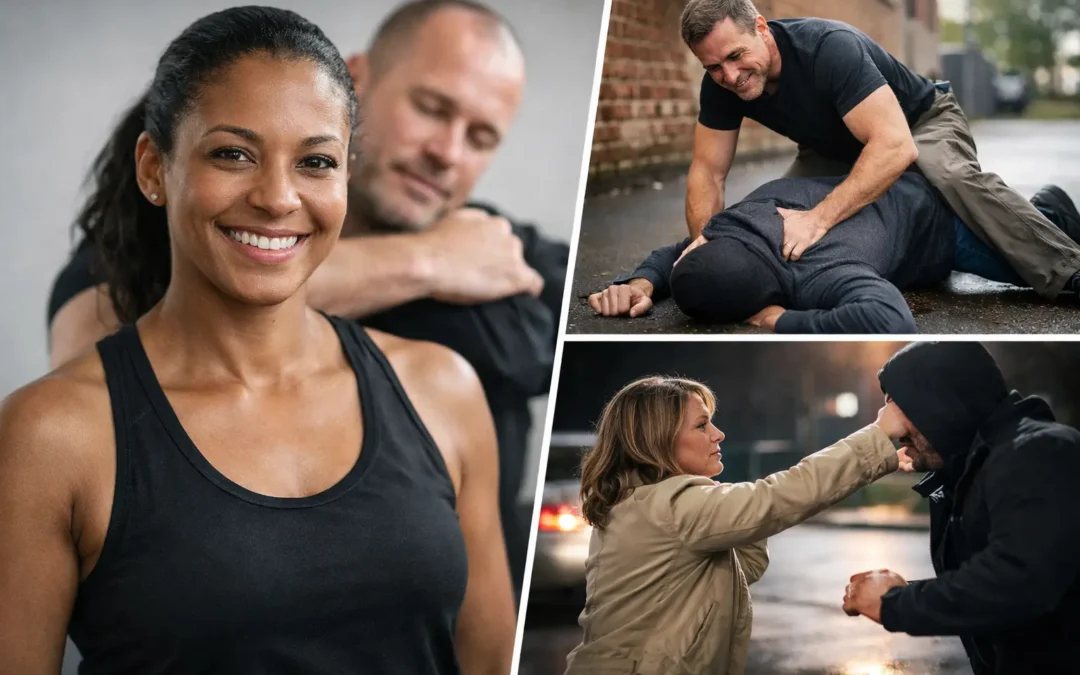
A successful self-defense moment rarely looks like a movie scene. It may look like noticing a person following too closely in a parking lot, changing direction, and getting inside a busy store. It may look like using a clear, firm voice to stop unwanted contact. The adult self defense success stories that matter most are often the ones where someone gets home safely without needing to fight at all.
That does not make the training less valuable. It proves the point of good training: give adults practical options, build calm under pressure, and help them make sound decisions when a situation feels wrong. Physical techniques matter, but so do awareness, boundaries, conditioning, and the confidence to act early.
What Adult Self Defense Success Stories Really Show
People often assume success means overpowering an attacker. In reality, a responsible self-defense program teaches a wider definition. Success can mean recognizing danger, creating distance, getting attention, escaping a bad position, or protecting yourself long enough to reach safety.
That broader view is especially important for adult beginners. Students arrive with different ages, body types, fitness levels, work schedules, and prior experiences. A useful program does not promise that every threat can be controlled. It helps people improve their odds by practicing skills they can use under stress.
The strongest stories are not about fear. They are about preparation replacing panic. When a student knows how to move, speak, and respond, they do not have to freeze and figure everything out in the moment.
The Parking Lot Story: Awareness Created the Exit
Consider an adult leaving work after dark. The parking lot is not empty, but it is quiet. On the way to the car, the student notices someone changing direction to stay behind them. Instead of dismissing that uncomfortable feeling, they move toward better lighting and other people, keep their hands free, and call for help.
No strike is thrown. No dramatic confrontation happens. The person following breaks away when the situation becomes less private and less predictable.
This is a meaningful success because training reinforced a simple habit: pay attention before reaching the car door. Adults who practice self-defense often become more deliberate about scanning their surroundings, limiting distractions, and choosing where they park. These are not guarantees of safety, and no one is responsible for another person’s harmful behavior. They are practical layers of protection that can create an earlier path out.
Why this outcome matters
Many dangerous encounters get worse when someone feels trapped, surprised, or unsure how to respond. Awareness does not eliminate risk, but it can buy time. Time creates choices, and choices create opportunities to leave.
The Boundary Story: A Confident Voice Changed the Moment
Another common situation is less obvious than a parking lot encounter. It may happen at a party, in a workplace hallway, or while waiting in line. Someone stands too close, touches an arm after being told not to, or ignores a person’s attempt to move away.
A trained response can begin with posture and voice. Standing balanced, creating space, making eye contact when appropriate, and saying “Stop. Do not touch me” clearly can draw attention and establish a boundary. That direct response may feel uncomfortable at first, especially for adults who were taught to avoid making a scene.
In many adult self defense success stories, the student’s biggest change is not a technique. It is the willingness to trust their judgment and speak with authority. Martial arts training gives people a place to practice that voice before they need it.
A verbal boundary will not work in every situation. Some people ignore words, and that is why physical training, escape skills, and a plan to seek help are valuable. Still, a clear boundary is often the right first tool when there is space and the situation has not become physical.
The Ground Escape Story: Practice Prevented Panic
Falls, grabs, and unwanted restraint are frightening because the body can feel pinned before the mind catches up. This is where grappling-based training can make a powerful difference. Brazilian Jiu-Jitsu and wrestling fundamentals teach students how to protect their posture, create frames with their arms, move their hips, break grips, stand safely, and get away.
Imagine an adult who slips during a confrontation and lands on the ground. Before training, they may have panicked and tried to push straight upward with little leverage. After consistent practice, they understand the first goal is not to win a wrestling match. It is to protect themselves, make room, get to their feet, and leave.
That distinction matters. Self-defense is not a competition, and the safest option is always to avoid or escape a confrontation when possible. But adults gain real confidence when they know that being knocked down does not automatically mean they are helpless.
The Confidence Story: The Change Started Before an Emergency
Not every success story involves a dangerous encounter. Some of the most lasting changes happen in ordinary life. An adult who once avoided evening walks begins exercising with confidence. A parent feels better prepared to talk with their teenager about personal safety. A professional who spends long hours at a desk develops better balance, stamina, and stress control.
These changes are not separate from self-defense. They support it. Training consistently improves body awareness and helps students become more comfortable taking up space, moving with purpose, and staying composed when tired.
For many adults, the first victory is simply walking through the academy door. They may worry that they are too old, out of shape, or inexperienced. A beginner-friendly class replaces that uncertainty with structure: warm up, learn a skill, practice safely, ask questions, and improve one session at a time.
At United Martial Arts Katy, that structure is part of the goal. Certified instruction, controlled practice, and a respectful training environment allow beginners to develop skill without being thrown into situations beyond their level.
What Makes a Self-Defense Story Credible
Good self-defense training should make students more prepared, not overconfident. Be cautious of any program that promises an easy move that works against everyone, every time. Real encounters are unpredictable. Size, surprise, multiple people, weapons, surroundings, and stress can all change what is possible.
Credible training addresses those trade-offs. It teaches students to avoid unnecessary conflict, use verbal de-escalation when it is safe, run when they can, and use physical skills only when they need to protect themselves. It also emphasizes legal and ethical judgment. The purpose is safety, not proving toughness.
Technique needs repetition. A move learned once in a short seminar may be useful as an introduction, but reliable reactions come from regular practice. Students need to feel what balance, resistance, pressure, and fatigue are like in a supervised setting. That is how a skill becomes more available when adrenaline rises.
A safer way to measure progress
Adults do not need to wait for a crisis to know whether training is helping. Progress shows up in small, measurable ways: better conditioning, stronger posture, quicker recognition of unsafe situations, improved ability to get up from the ground, and greater comfort setting boundaries.
Those gains build over time. A person may begin with basic awareness and simple escapes, then develop more confidence through repeated drilling and controlled partner work. Consistency matters more than trying to learn everything at once.
Start Building Your Own Success Story
The best adult self-defense success stories are not stories anyone hopes to test. They are stories of people who chose preparation before they felt fully ready. They trained their bodies, sharpened their awareness, and learned that confidence is built through action rather than wishful thinking.
Start with a class that respects your current ability, teaches practical skills with control, and gives you room to grow. The goal is not to become fearless. It is to become more capable, more alert, and more prepared to protect the life you have worked hard to build.


Recent Comments