
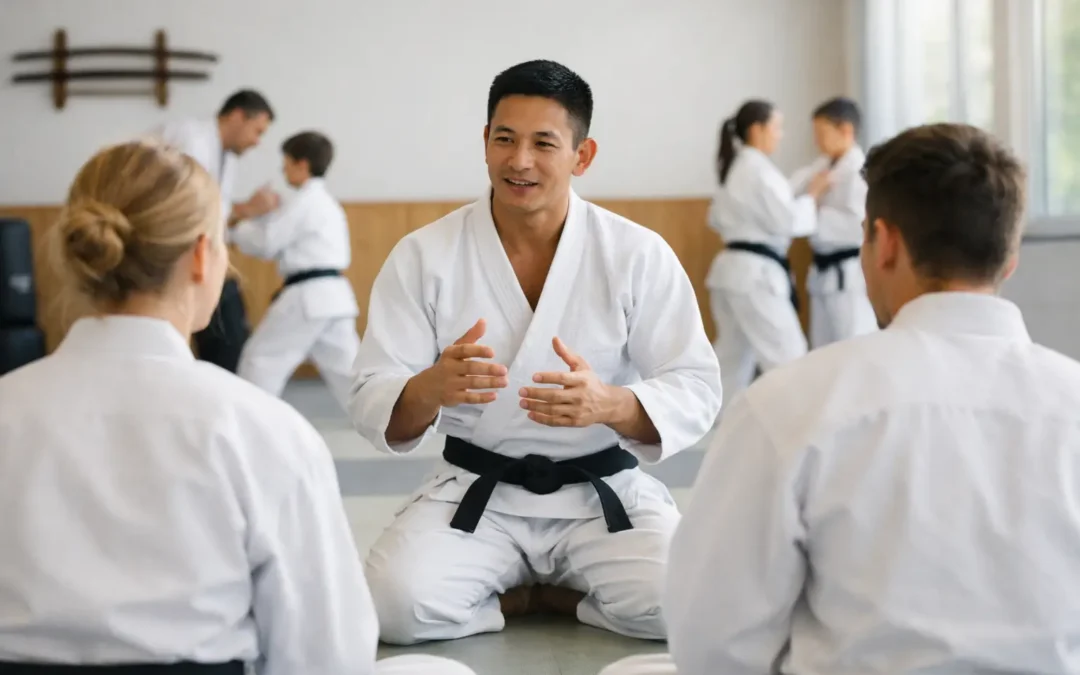
The hardest part of your first class often happens before you step onto the mat: walking through the door. You may wonder whether everyone else will be more experienced, whether you will know what to do, or whether you need to be in great shape first. The reality behind beginner martial arts class expectations is far more encouraging. A well-run academy expects beginners to be new. Your job is not to perform perfectly. It is to arrive ready to learn, listen, and give an honest effort.
At United Martial Arts Katy, students train in a structured environment where safety, respect, and steady progress come before showing off. Whether you are considering martial arts for your child, your teenager, or yourself, the first class is about building a foundation that can grow over time.
What Happens in a Beginner Martial Arts Class?
Most beginner classes follow a clear rhythm. That structure is not there to make training feel rigid. It helps new students feel secure, keeps the class moving safely, and gives everyone a reliable way to measure progress.
You will usually begin by checking in, meeting an instructor, and receiving simple guidance about where to stand, what to wear, and how class works. If you are taking a trial class, comfortable workout clothes are often enough unless the academy tells you otherwise. Bring water, arrive a few minutes early, and remove jewelry that could get caught during training.
Class commonly starts with a warm-up. Expect movements that prepare your body for the lesson, such as light jogging, mobility work, bodyweight exercises, or martial arts-specific footwork. A warm-up may feel challenging if you have been inactive, but it should be adaptable. Good instructors provide options and pay attention to how beginners are responding.
After warming up, the instructor introduces a focused skill. In Tae Kwon Do, that could be a stance, block, kick, or basic form. In Brazilian Jiu-Jitsu or wrestling, it may be a safe falling technique, a position, an escape, or a controlled movement with a partner. You will see the technique demonstrated, then practice it in manageable steps.
The class may finish with light conditioning, review, stretching, or a respectful closing. You will not be expected to memorize everything in one session. Repetition is part of the process.
You Will Learn More by Listening Than by Rushing
Beginners sometimes assume progress comes from moving faster or using more force. In martial arts, control is usually more valuable than intensity. The instructor may correct your posture, foot placement, hand position, balance, or timing several times. That is not criticism. It is coaching.
Small adjustments matter because they help you develop technique that is safer and more effective. A properly placed stance can improve balance. A controlled partner drill can teach awareness. A calm response under pressure can become a valuable self-defense habit.
Beginner Martial Arts Class Expectations for Fitness
You do not need to “get in shape” before beginning martial arts. Training itself is a path toward better conditioning. Still, expect your first few classes to work muscles you may not use often. Your legs, core, grip, shoulders, and cardiovascular endurance can all be challenged in different ways depending on the program.
That challenge should be productive, not punishing. You may leave class tired, sweaty, and pleasantly surprised by how much you learned. You may also be sore the next day, especially after your first sessions. Light soreness is normal when your body is adapting; sharp pain, dizziness, or discomfort that feels wrong is a signal to stop and speak with the instructor.
Fitness progress is not identical for every student. An adult training for stress relief may prefer a steady pace and technical practice. A teen preparing for competition may gradually take on more demanding rounds. A young child may develop coordination and focus through shorter, energetic drills. The right program meets the student where they are and gives them a clear next step.
Expect a Safe Introduction to Partner Work
For many people, partner drills are the biggest unknown. Parents may worry that their child will be thrown into sparring. Adults may worry about being paired with someone much larger or more advanced. Responsible martial arts instruction does not treat beginners that way.
Partner work begins with rules, supervision, and controlled practice. You may work with an instructor or a more experienced student who understands how to help a newcomer. Contact, resistance, and complexity should increase gradually as your skill and confidence grow.
In striking classes, beginners typically learn distance, targeting, control, and protective equipment requirements before any sparring becomes an option. In grappling programs, students learn how to move safely, tap when needed, and respect a partner’s limits. The goal is not to win a first-day exchange. It is to learn how to train responsibly.
What Beginners Should Bring Besides Workout Clothes
A positive mindset matters, but a little preparation makes the first day easier. Plan to arrive early enough to settle in rather than rushing onto the mat. Eat a light meal beforehand if you need energy, but avoid arriving overly full. Let the instructor know about injuries, medical considerations, or concerns about intensity.
Bring these basics when appropriate:
- Water and a towel
- Comfortable, clean workout clothing
- A positive attitude and willingness to ask questions
- Any required forms or trial-class information
For children, parents can help by setting a simple expectation: listen to the instructor, try your best, and be kind to training partners. Avoid promising that every class will be easy or that they will earn a belt right away. Martial arts builds confidence partly because students learn to work through challenges with support.
The Culture Matters as Much as the Curriculum
A martial arts academy is more than a place to exercise. The environment shapes how students train and whether they stay committed long enough to see real change. Look for instructors who know how to teach beginners without talking down to them. Notice whether students show respect to one another, whether the facility is clean, and whether questions are welcomed.
For families, a strong culture creates consistency between what children hear at home and what they practice in class: discipline, respect, responsibility, and perseverance. For adults, it creates a rare kind of accountability. You are not simply checking off a workout. You are developing a skill alongside people who recognize the effort that takes.
There is a trade-off to consider. A class that feels highly casual may be less intimidating at first, but it may not provide the structure needed for reliable progress. A disciplined academy should have standards, yet those standards should be taught with patience. The best environment feels both welcoming and purposeful.
Progress Is Measured in More Than Belts
Belts are meaningful milestones, especially for children who benefit from visible goals. But your earliest progress may show up in quieter ways. You may stand taller during drills, remember a sequence without prompting, recover your breathing faster, or speak up with more confidence. A child who once avoided group activities may begin volunteering to demonstrate a movement. An adult who came in feeling stressed may leave feeling focused.
Do not compare your first month to someone else’s fifth year. Advanced students were beginners once, and their ability is evidence that consistent practice works. Attendance, effort, and attention to instruction will take you farther than trying to learn everything at once.
Some weeks will feel easier than others. You might grasp a new technique quickly, then struggle with the next one. That is normal. Martial arts teaches a valuable lesson: improvement is rarely a straight line, but disciplined practice keeps moving it forward.
Make Your First Class a Starting Point
Your first class does not need to answer every question about your martial arts journey. It only needs to show you whether the instruction is safe, the environment is encouraging, and the training gives you a reason to return. Ask about beginner pathways, class schedules, age-appropriate programs, and how instructors support individual goals.
Then give yourself permission to be new. Show up, focus on the next instruction, and trust that every confident student on the mat began with the same first step.

Recent Comments